
Mongolia’s whole timeline, one floor at a time
You start with chipped stone and end with protest banners. The National Museum of Mongolia covers the country’s history from the Stone Age to the 1990 democratic revolution. It’s laid out over three floors, roughly in chronological order. The climb up the stairwell works like a walk through time.
The building opened in 1971 as a museum of the communist revolution. It was reorganised as a national history museum after 1991, and its themes changed along with the politics. Its location tells you how central that story is: it sits on Travel Street, a short walk from the Government Palace.
What fills the galleries
The lower galleries cover prehistory and the early steppe states. Expect rock art, bronze tools, and deer stones, the carved standing stones found across the Mongolian grasslands. There are also finds from the Xiongnu, the nomadic confederation that once troubled Han China.
Further up, the collection becomes more personal. The galleries that get the most attention include:
- Ethnic dress: a long run of traditional costumes from Mongolia’s different ethnic groups, with silver headdresses and coral-studded jewellery.
- The Mongol Empire: armour, weapons and maps that follow Chinggis Khaan’s expansion across Eurasia.
- Nomadic life: a furnished ger with saddles, tack and the household objects of herding families.
- The 20th century: the socialist decades and the peaceful 1990 revolution that brought multi-party democracy.
Give yourself 1.5–2 hours. Costume and textile lovers will want longer on the middle floor.
Finding the entrance
The address is Travel St 1, Chingeltei district (khoroo 4), Ulaanbaatar 15160. Locally the street is Juulchin Gudamj. The museum stands about a block from the northwest corner of Sükhbaatar Square, so you can reach it on foot from most central hotels.
Ulaanbaatar has no metro, and traffic around the square locks up at rush hour. Walking is usually faster than a taxi from anywhere downtown. In winter, the short walk is often the coldest part of the visit, so dress for it rather than for the galleries.
Cameras, coats and the ticket desk
A few habits make the visit smoother here.
- Ask about photography first. Mongolian museums often charge separately for a camera permit. Check at the ticket desk before you raise your phone, because gallery attendants do enforce it.
- Check the posted prices at the desk. Admission and permit rates are listed there. Cards are common in central Ulaanbaatar, but carrying some tögrög in case the card machine is down.
- Dress in layers. The galleries are heated, and a full winter coat gets heavy over two hours of stairs.
- Read the labels selectively. Many displays have English captions, but they vary in detail. A Mongolian history primer read beforehand adds a lot to the Xiongnu and empire rooms.
Keep your voice down near the attendants and don’t touch the costumes. Many are fragile textiles that sit behind glass for good reason.
Choosing your day
Currently the museum opens 9am–6pm Tuesday to Sunday and is closed on Mondays. Make sure Monday isn’t your only free day in the city. Museum hours can shift with the season and over public holidays, so check the official listing before you go.
Weekends are the easy choice. Measured visitor traffic shows Saturday and Sunday are quiet across the full 9am–6pm window. Arriving at 9am still gives you the costume galleries with the most room. Leave at least two hours before the 6pm close so you don’t rush the 20th-century rooms.
Around Sükhbaatar Square
The museum fits well into a half-day loop of the city centre. Within a short walk you’ll find:
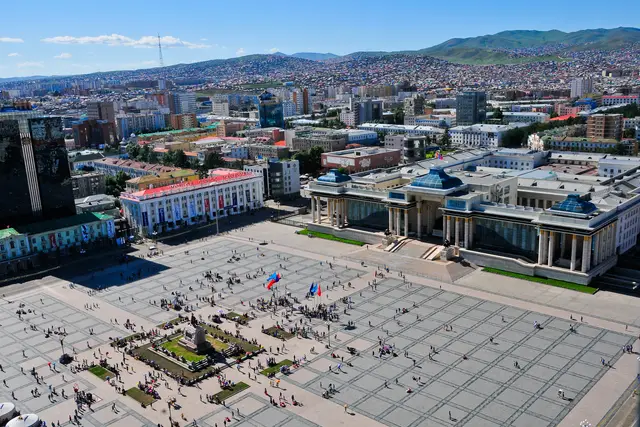
- Sükhbaatar Square: the main civic square, with the equestrian statue of Damdin Sükhbaatar at its centre.
- The Government Palace: on the square’s north side, fronted by a large seated statue of Chinggis Khaan.
- Central Museum of Mongolian Dinosaurs: just off the square, best known for its Tarbosaurus skeleton, which was repatriated from the United States.
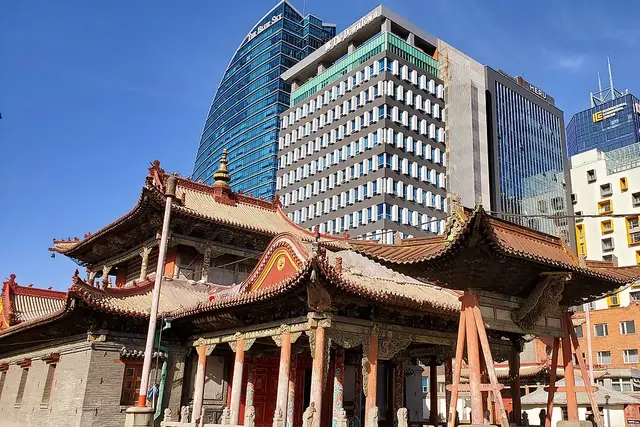
- Choijin Lama Temple Museum: a little south of the square, an early 20th-century Buddhist temple complex now hemmed in by tower blocks.
See the National Museum first. Its timeline gives context to everything else on the loop, especially the Chinggis Khaan statue and the temple.
Frequently asked questions
Where exactly is the National Museum of Mongolia?
It's at Travel St 1 (Juulchin Street), Chingeltei district, Ulaanbaatar 15160. That's about a block from the northwest corner of Sükhbaatar Square, an easy walk from most central hotels.
When is the quietest time to visit?
Weekends are quiet across the whole 9am–6pm opening window. Arriving at 9am on Saturday or Sunday gives you the most space in the popular costume galleries.
What days is it open?
Currently it opens 9am–6pm Tuesday through Sunday and is closed on Mondays. Hours can change with the season and on public holidays, so check the official listing before you go.
How long should I spend inside?
Plan for 1.5–2 hours to cover all three floors. Leave extra time if traditional dress, jewellery or Mongol Empire history are your main interests.
Can I take photos?
Photography usually needs a separate permit, which you buy at the ticket desk. Ask there first, where the current prices are posted, because attendants enforce the rule in the galleries.
Plan your trip to Ulaanbaatar
Mongolia eSIM & staying connected →
Some links above are affiliate links — if you book through them, Wander Atlas earns a small commission at no extra cost to you. It's how we keep every guide free.
Related guides
 attraction
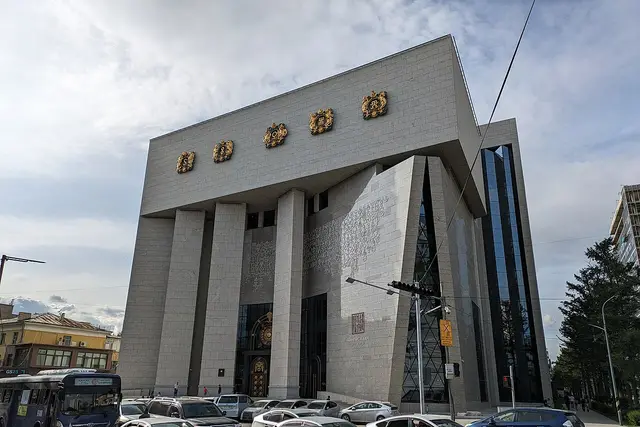
 Chinggis Khaan National Museum Mongolia: Ulaanbaatar Travel Guide
 attraction
 Sükhbaatar Square: Ulaanbaatar Travel Guide (4.6★)
 attraction
 Choijin Lama Temple Museum: Ulaanbaatar Travel Guide (4.4★)
 attraction