A city stacked into the rock
The cliff is honeycombed. From the valley floor you see tier after tier of dark openings in pale volcanic tuff. They rise high above the Mtkvari River, linked by ledges, stairways and tunnels.
This is Vardzia, a monastery-city begun under King George III in the late 12th century and expanded by his daughter, Queen Tamar. It was a working monastery and a refuge, with room for a large population behind the rock. A small community of monks still lives here, which shapes how you should behave on the cliff.
Most of what you see was never meant to be on show. A major earthquake in 1283 sheared away the outer face of the mountain. It exposed rooms that had been sealed inside the rock, and that is why the cliff now looks like a building with its front wall torn off.
Inside the cliff
The path runs along the face and in and out of the caves. Hundreds of chambers survive, cut directly into the stone. You will pass:
- Living cells, some with carved niches and benches
- Wine cellars (marani), with clay qvevri jars sunk into the floor
- Bakeries and storerooms, recognisable by their ovens and shelving
- Water channels, part of a system that fed the complex from a spring
- Defensive passages, narrow and low, designed to be held by a few people
The centrepiece is the Church of the Dormition, a rock-cut church with a stone-arched porch. Its walls carry frescoes from Tamar’s reign. They include a royal portrait of Tamar herself beside her father, among the few images of her made in her lifetime. Light levels are kept low, and the paintings need a minute for your eyes to adjust.
“Ak var, dzia”: the name the cliff keeps
Every guide here tells the same story. As a girl, Tamar is said to have wandered off into the unfinished caves. When her uncle called for her, she answered “Ak var, dzia!”, Georgian for “I’m here, uncle!”
The phrase supposedly became the name: Vardzia. Treat it as legend rather than history. It does capture why Georgians feel about this place the way they do. Tamar is the country’s most revered monarch, and Vardzia is where you stand closest to her.
The road from Akhaltsikhe
Akhaltsikhe is the natural base. The drive south follows the Mtkvari gorge through Aspindza and takes roughly 1–1.5 hours, past orchards and terraced slopes. The site sits near the village of Gogasheni, and the car park and ticket office lie at the foot of the cliff.
You have three realistic options:
- Drive yourself, which lets you stop at Khertvisi Fortress on the way
- Hire a taxi or driver from Akhaltsikhe for the round trip, with waiting time agreed upfront
- Take a marshrutka from Akhaltsikhe bus station; departures are few, so confirm the return time before you leave
Many visitors also come on day tours from Borjomi or Tbilisi. That makes for a long day, and it explains why the coaches cluster mid-morning to early afternoon.
Climbing the cliff without the crowds
Vardzia is one of the most-visited sites in southern Georgia and consistently well rated. Plan around the groups rather than hoping for solitude.
Arrive close to the 10am opening. Groups driving in from Tbilisi or Borjomi rarely make it that early, so the first hour usually gives you the frescoes at a gentler pace. Late afternoon tends to thin out too, as tours head home.
Dress for a monastery. Cover your shoulders and knees. Women are expected to cover their heads inside the church, so carry a scarf. Speak quietly in the church, and do not photograph the monks or their living area, which is closed off.
Photography in the church is restricted. Look for the signage at the door and follow it; flash is never welcome near the frescoes.
Buy tickets at the office at the base. The current price is posted there. Ask at the counter whether audio guides or local guides are available that day; a guide brings the water system and the defensive tunnels to life.
Pace the climb. Stairs are steep and uneven, railings are basic, and the cliff path offers little shade. Bring water and wear shoes with grip. The final stretch runs through a tight, low tunnel carved in the rock. It is dark and best taken slowly, so use your phone torch.
Timing your day
The site is currently open 10am–7pm every day of the week. Cliff sites like this adjust their hours by season and on some holidays, so check the official listing for this month’s times before you drive out.
Allow 2–3 hours to walk the full route, step into the church and come down without rushing. Add travel time and a stop on the way, and Vardzia fills most of a day from Akhaltsikhe.
Spring and autumn are the most comfortable seasons for the climb. In high summer, the exposed rock holds the heat, so the morning slot matters more. In winter, ice can make the steps slippery; check conditions locally first.
Pairing it: Khertvisi, Vanis Kvabebi and Rabati
Three places make the trip fuller.
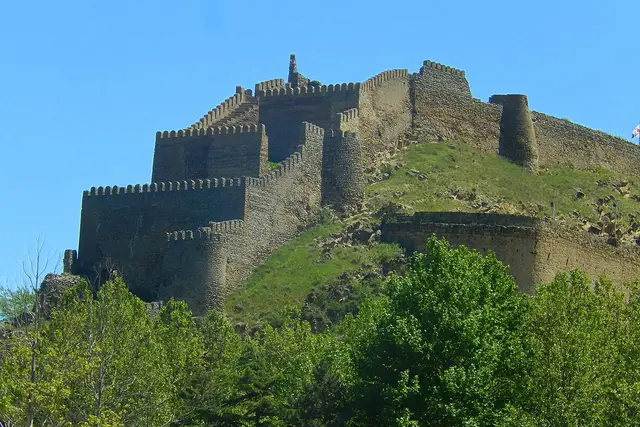
- Khertvisi Fortress stands on a rocky spur where two rivers meet, right beside the road to Vardzia. It is one of Georgia’s oldest surviving fortresses and takes 30–45 minutes to climb and explore.
- Vanis Kvabebi is an older cave monastery a short distance before Vardzia, on the same side of the valley. It is smaller and steeper, with a defensive wall running across the cliff.
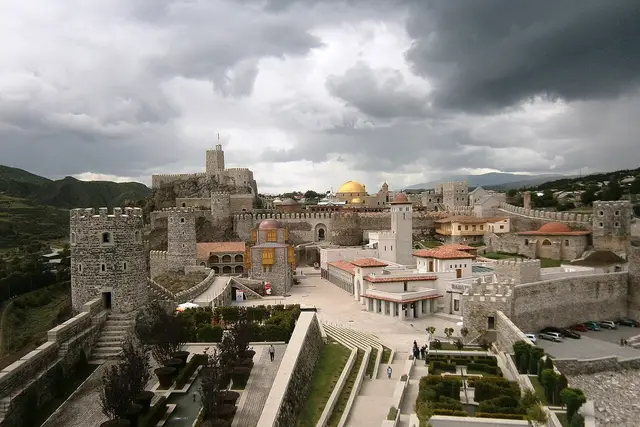
- Rabati Castle in Akhaltsikhe is a heavily restored fortress complex with a mosque, church and synagogue-era quarter inside its walls. It works well as an evening walk once you are back.
If you are staying in Akhaltsikhe for two nights, give Vardzia and Khertvisi one day. Save Rabati and the forested Sapara Monastery for the other.
Frequently asked questions
How do I get to Vardzia from Akhaltsikhe?
Drive or take a taxi south through Aspindza along the Mtkvari gorge, roughly 1–1.5 hours. Marshrutkas leave from Akhaltsikhe bus station, but departures are few, so confirm the return time before you set off.
When is the best time of day to visit Vardzia?
Arrive close to the 10am opening. Day tours from Tbilisi and Borjomi usually arrive later in the morning, and late afternoon tends to thin out as they leave. Hours currently run 10am–7pm daily but change with the season, so check before you go.
How long should I spend at Vardzia?
Allow 2–3 hours for the cliff route, the Church of the Dormition and the tunnel descent. Add about 45 minutes if you stop at Khertvisi Fortress on the way.
Is there a dress code at Vardzia?
Yes. It is still a working monastery. Cover your shoulders and knees, and women should bring a scarf to cover their heads inside the church.
Is Vardzia physically demanding?
Moderately. Expect steep, uneven stairs, little shade on the cliff face and a narrow, dark tunnel near the end. Wear shoes with grip, carry water and keep a torch handy.
Plan your trip to Akhaltsikhe
Georgia eSIM & staying connected →
Some links above are affiliate links — if you book through them, Wander Atlas earns a small commission at no extra cost to you. It's how we keep every guide free.