Regional Museum of Natural History: Bhubaneswar Travel Guide
✓ Facts verified via Google Places · Aug 29, 2026
At a glance
Opening hours
- Monday: Closed
- Tuesday: 10:00 AM – 6:00 PM
- Wednesday: 10:00 AM – 6:00 PM
- Thursday: 10:00 AM – 6:00 PM
- Friday: 10:00 AM – 6:00 PM
- Saturday: 10:00 AM – 6:00 PM
- Sunday: 10:00 AM – 6:00 PM
Live foot-traffic data via BestTime.app
How this guide is made
Produced with AI assistance and reviewed against live data sources. Facts such as hours, ratings, and location come from Google Places; images are licensed or public domain. Details can change — please verify before visiting. Editorial policy
Why go
Bhubaneswar is a city built on temples (Lingaraj, Mukteshwar, the whole Old Town skyline of curved shikharas), so a natural history museum can feel like an odd detour on a temple-hopping itinerary. That’s exactly why it’s worth the detour. This is a science museum run under India’s Ministry of Environment, Forest and Climate Change, and it does something most temple visits don’t: it hands you a fossil to touch, lets you press a button and watch a model volcano light up, and walks you through Odisha’s own ecology (its mangroves, its Similipal forest tigers, its Chilika Lake birdlife) before you ever set foot in the wild version of any of it.
Getting there
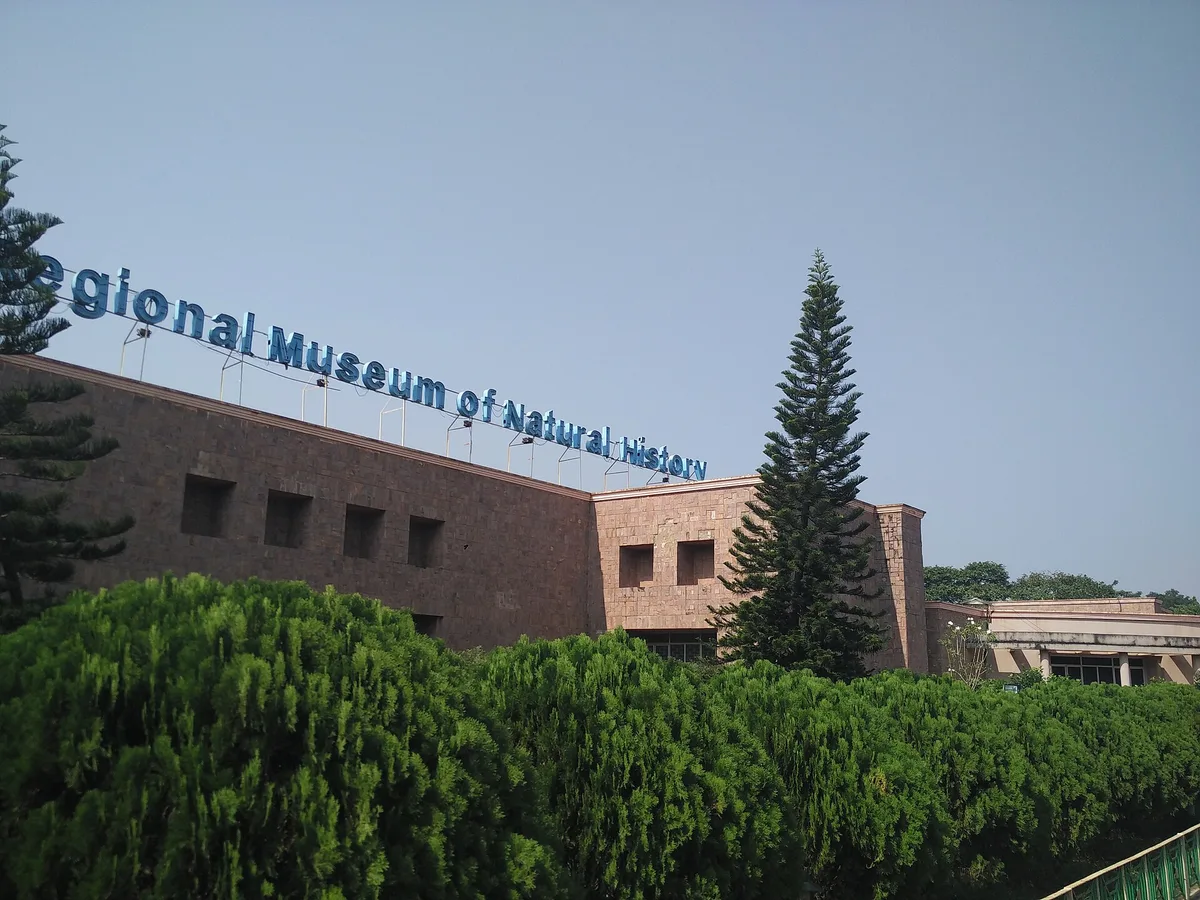
The museum sits on Sachivalaya Marg in Acharya Vihar, in the Doordarshan Colony area of central Bhubaneswar, tucked right beside the Pathani Samanta Planetarium, the two make an easy combined stop if you’re driving or auto-rickshawing between them. Bhubaneswar’s layout is spread out and low-rise, so most visitors arrive by auto-rickshaw or app-based cab rather than on foot; ask for “Regional Science Centre area, near the Planetarium” and most drivers will know the stretch immediately, since it’s a recognizable landmark cluster near the Secretariat (Sachivalaya) zone. If you’re coming from the railway station or Old Town temples, allow 20–30 minutes by road depending on traffic.
What to see
The exhibits are organized so you move roughly chronologically and thematically: fossils and geological time near the entrance, then dioramas of taxidermied Indian wildlife, then a hall dedicated to human biology with cutaway models you can actually pull apart and inspect. Kids gravitate to the hands-on activity stations (gears, levers, sensory illusions), where the museum has clearly designed for small hands rather than glass cases you just stare through.
Outside, the vivarium houses live reptiles and amphibians, a genuinely rare sight in an Indian museum setting, and it’s usually the room where you hear the most gasps from school groups.
The standout, though, is the botanical garden for the visually impaired, a fragrant, tactile garden planted with species chosen for scent and texture, with signage in Braille. It’s a rare piece of inclusive design you don’t often find in Indian public institutions, and even sighted visitors tend to slow down here, running fingers over leaf textures instead of just reading labels.

When to go
The museum keeps set opening hours and a weekly closing day, like most institutions of its kind, so it’s worth checking current timings before you go rather than assuming it will be open. Plan around that if you’re building a single-day Bhubaneswar itinerary. Weekends get busy, with the heaviest footfall between 11am and 6pm as local families and school groups arrive in waves.
If you want the galleries to yourself, aim for a weekday morning close to opening time, before the tour buses and family groups build up. A weekday visit also means the vivarium and hands-on stations won’t have a queue of kids waiting for a turn.
How to visit like a local
This isn’t a hidden gem. It’s a well-known, well-reviewed institution that plenty of Bhubaneswar families already treat as a standard school-holiday outing, so don’t expect to have it to yourself, especially on weekends. The practical local move is timing: go on a weekday, ideally right at opening time, and you’ll beat both the heat outside and the crowds inside.
Tickets are sold at a counter on-site and are inexpensive, but prices do get revised, so treat any figure you’ve read online as approximate and just budget a small amount in cash. Photography is generally allowed in the galleries but check signage near the vivarium and any temporary exhibits, since live-animal areas sometimes restrict flash photography. Pair the visit with the adjacent planetarium if you have half a day free. Many visitors do both back to back, and combining them saves a second trip across town.
Wear comfortable shoes for the tactile garden path, and don’t rush the Braille garden; it rewards slowing down more than any other corner of the museum.
Nearby
Beyond the planetarium next door, you’re a short ride from Bhubaneswar’s temple cluster around Bindusagar Lake, Lingaraj Temple and Mukteshwar Temple both make sense as a same-day pairing, giving you an ancient-and-scientific contrast within a single Bhubaneswar day out.
Frequently asked questions
What are the opening hours?
10:00 AM–6:00 PM every day except Monday, when the museum is fully closed.
How long should I plan to spend there?
Most visitors need 90 minutes to two hours to cover the galleries, vivarium, and the tactile botanical garden without rushing.
How do I get there?
It's on Sachivalaya Marg in Acharya Vihar, right beside the Pathani Samanta Planetarium — easiest by auto-rickshaw or cab, about 20–30 minutes from the railway station or Old Town temples.
When is it least crowded?
Weekends between 11am and 6pm are the busiest window, so aim for a weekday, ideally soon after the 10am opening, for a quieter visit.
What's the entry fee?
Tickets are inexpensive and sold at the on-site counter, but the exact price changes periodically, so confirm it when you arrive rather than relying on an old figure.
Plan your trip to Bhubaneswar
Some links above are affiliate links — if you book through them, Wander Atlas earns a small commission at no extra cost to you. It's how we keep every guide free.
Related guides
 attraction
 Odisha State Museum: Bhubaneswar Travel Guide (4.5★)
 attraction
 Udayagiri and Khandagiri Caves: Bhubaneswar Travel Guide
 attraction
 Lingaraj Temple: Bhubaneswar Travel Guide (4.7★)
 Ended
Ended