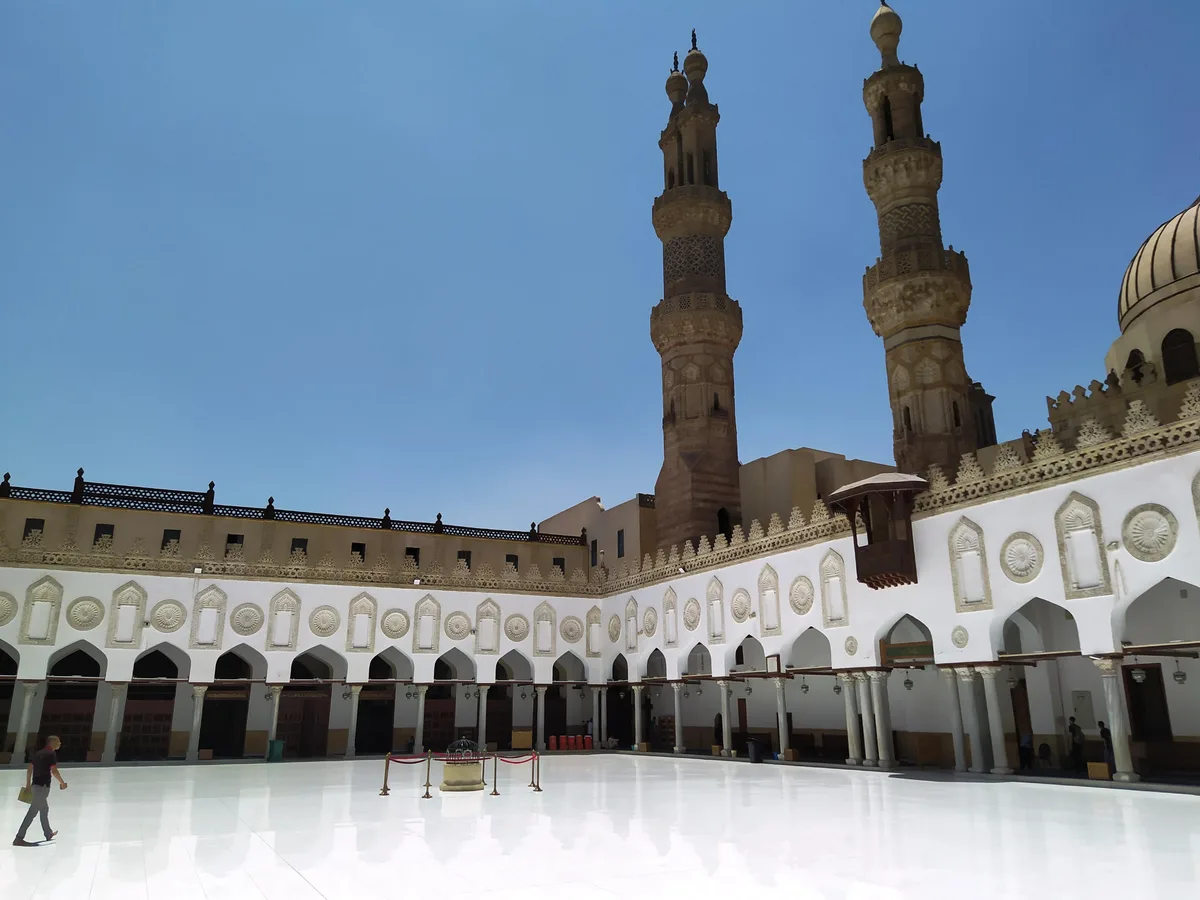
Marble, minarets and a thousand years of study
You step through a stone gateway and the street noise stops. In front of you is a wide courtyard of pale marble, framed by arcades of pointed arches. You cross it in socks, because your shoes are back at the gate.
Al-Azhar was commissioned in 970 by the Fatimid dynasty, the rulers who founded Cairo itself. It was Cairo’s first mosque. It grew into one of the oldest continuously running centres of Islamic learning anywhere, and Al-Azhar University still carries its name.
It remains a working mosque. Students sit with books in the prayer hall, and people come in to pray between the tourists. Treat it as a place of worship that happens to take visitors.
What to look for inside
Every dynasty that ruled Cairo added something, so the building reads like layers of rock. Look for these:
- The courtyard (sahn): the original Fatimid core, edged with keel-shaped arches and carved stucco.
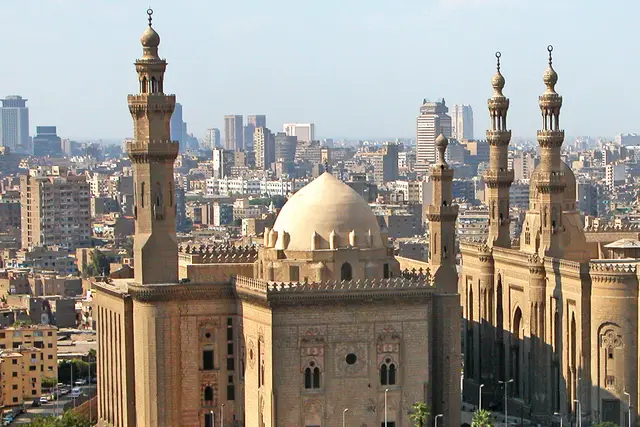
- The minarets: several rise above the roofline. The twin-headed one built for Sultan al-Ghuri in the early 1500s is the easiest to pick out.
- The Barber’s Gate (Bab al-Muzayinin): the main visitor entrance, named for the barbers who once shaved students’ heads here.
- The prayer hall: a forest of columns under a flat ceiling, carpeted and dim after the bright courtyard.
Stand in the far corner of the courtyard and look back toward the gate. From there you see the minarets of different centuries side by side.
Reaching it through Islamic Cairo
The mosque sits on the south side of Al-Azhar Street, facing Al-Hussein Mosque and the lanes of Khan el-Khalili. Most visitors combine all three on one walk.
The nearest metro stop is Bab El Shaaria on Line 3. From there it’s a walk of about 15 minutes east through busy streets. A taxi or ride-hailing app will drop you at Al-Hussein Square, which is simpler if you’re coming from Zamalek or Downtown.
Al-Azhar Street carries heavy traffic. Cross at the marked pedestrian points near Al-Hussein rather than weaving between cars.

Planning around the listed hours
Google currently shows a very narrow schedule: Friday only, 11:00 AM – 7:00 PM, with every other day marked closed. Mosque visiting hours in Cairo change through the year and around Ramadan and religious holidays. Treat this week’s listing as a warning, not a permanent rule, and confirm before you go.
If Friday is your day, remember that Friday’s midday congregational prayer is the most important of the week. Non-Muslim visitors are normally asked to wait until it ends. Aim for the afternoon, comfortably inside the 7:00 PM close. In late afternoon the courtyard marble cools and the light on the arcades turns softer.
Getting through the Barber’s Gate properly
This is one of Cairo’s most-visited monuments, so a few habits make it go smoothly.
- Dress: shoulders and knees covered for everyone. Women should bring a scarf for their hair. Wraps are sometimes handed out at the entrance, but don’t count on it.
- Shoes: you hand them to an attendant or carry them in a bag. A small tip to the shoe attendant is customary. Have small Egyptian banknotes ready.
- Guides: men at the gate may offer to show you round. Agree whether it’s a paid tour before you start, or politely decline.
- Photos: photography in the courtyard is generally fine. Don’t photograph people praying, and keep voices low in the prayer hall.
- Space: don’t walk directly in front of anyone at prayer, and keep to the edges of the carpeted area.
Any entry rules or charges for visitors are posted at the gate. Ask there rather than trusting whoever approaches you outside.
Before and after your visit
You’re in the densest stretch of medieval architecture in Cairo, so plan an hour or two either side.
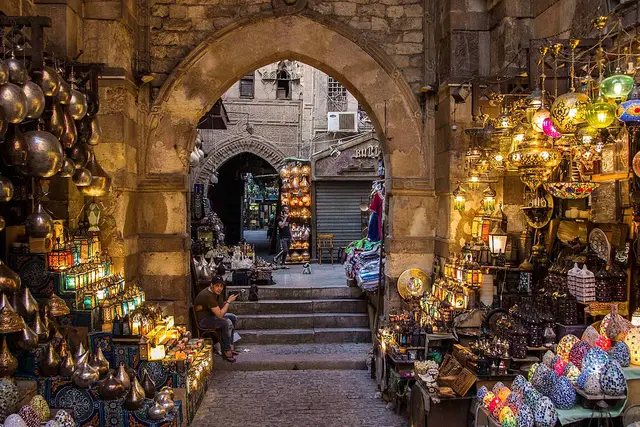
- Khan el-Khalili: directly across the street, for brass lanterns, spice stalls and the coffeehouses along its alleys.
- Al-Hussein Mosque: facing the square, one of the city’s most revered shrines.
- Wikala and Mausoleum of al-Ghuri: just west along Al-Azhar Street, where Tanoura dervish performances are held on some evenings.
- Al-Muizz Street: a short walk north, lined with Mamluk mosques, madrasas and sabils.
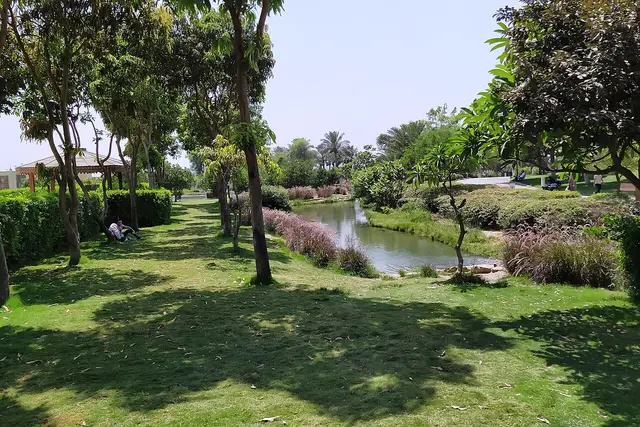
- Al-Azhar Park: to the east, with gardens and views back over the minarets of the old city.
Doing Khan el-Khalili first and then crossing to the mosque in the afternoon fits neatly around Friday prayers.
Frequently asked questions
When is Al-Azhar Mosque open to visitors?
Google currently lists it as open Friday 11:00 AM – 7:00 PM and closed on other days. Mosque visiting hours in Cairo shift through the year and around Ramadan and holidays, so confirm before you go. On Fridays, arrive after the midday prayer has ended.
What should I wear to visit Al-Azhar Mosque?
Everyone should cover their shoulders and knees. Women should cover their hair, so bring a scarf. You'll take your shoes off at the entrance, so socks are useful because the courtyard marble can be hot.
How do I get to Al-Azhar Mosque?
Take Metro Line 3 to Bab El Shaaria and walk about 15 minutes east, or take a taxi or ride-hailing car to Al-Hussein Square. The mosque faces Khan el-Khalili across Al-Azhar Street.
How long should I spend at Al-Azhar Mosque?
Plan on 45–60 minutes for the courtyard, the prayer hall and the minarets. Most visitors make it part of a half-day walk with Khan el-Khalili, Al-Hussein Mosque and Al-Muizz Street.
What is near Al-Azhar Mosque?
Khan el-Khalili bazaar and Al-Hussein Mosque are directly opposite. The Wikala of al-Ghuri is just west along Al-Azhar Street, Al-Muizz Street is a short walk north, and Al-Azhar Park lies to the east.
Plan your trip to Cairo
Egypt eSIM & staying connected →
Some links above are affiliate links — if you book through them, Wander Atlas earns a small commission at no extra cost to you. It's how we keep every guide free.