A market laid out in 1382
Start at the stone gate, not the souvenir stalls. Khan el-Khalili grew around a caravanserai built in 1382 by Emir Djaharkas el-Khalili, a Mamluk official under Sultan Barquq. Six centuries of building since then have left a maze of alleys that never quite run straight.
The Mamluk-era gate called Bab al-Badistan still stands at the heart of the old core. Around it, shopfronts push their goods into the lane. Brass lanterns hang in clusters overhead and rolls of fabric lean in doorways. Shopkeepers call out to you in four or five languages before you’ve reached their step.
This is one of the most-reviewed sights in Egypt, and it’s no secret. Expect company, and expect to be noticed.
Finding your way to Gamaliya
The souk sits in El Gamaliya, on the north side of Al-Azhar Street. Al-Hussein Mosque and its open square mark the main entrance. Tell any taxi or ride-hailing driver “Al-Hussein” and you’ll be dropped within a few steps of the lanes.
By metro, the closest stop is Bab El Shaaria on Line 3. From there it’s roughly a 15-minute walk east through ordinary working streets.
If you’re coming from Al-Azhar Mosque, use the pedestrian underpass beneath Al-Azhar Street. The traffic up top is not worth trying to cross.
What fills the shelves
The editorial line on this place is “souvenirs, crafts, jewellery, clothing and spices”, and that’s accurate. Here’s what you’ll see over and over:
- Pierced brass and coloured-glass lanterns, in sizes up to ones you can’t carry home
- Wooden boxes inlaid with mother-of-pearl
- Silver and gold cartouches engraved with your name in hieroglyphs
- Alabaster vases and small pharaonic figures
- Galabeyas, scarves and belly-dance costumes
- Spice pyramids, dried hibiscus (karkadeh) and perfume oils in blown-glass bottles
Quality runs from mass-produced to genuinely fine work, often in neighbouring shops. Pick things up, check the weight of the metal and look at the joins on inlay. Then decide what something is worth to you before you ask the price.

Bargaining in the Khalili lanes
Haggling is expected here, and doing it calmly is the local manner. Ask the price first and counter well below it. Then let the conversation take its time. Walking away politely is a normal move, and it often brings a better offer.
- Carry Egyptian pounds in small notes. Cash smooths every deal, and many smaller stalls don’t take cards.
- If someone offers to “show you a shortcut” or walks you to a cousin’s shop, a firm “la, shukran” (no, thank you) is enough.
- Accepting tea in a shop is hospitality, not a contract, but it does slow your exit.
- Dress with shoulders and knees covered. You’re beside two of Cairo’s most important mosques.
On Fridays, the midday prayer fills the area around Al-Hussein. Arrive after it rather than during it.
Timing your visit around the crowds
Shops currently open 11am–11pm every day of this week’s schedule. That gives you a long window, and the hours you choose change the experience a great deal.
It’s calmest between 11am and 3pm on weekdays, and between 11am and 2pm at weekends. Those are the hours to browse properly and bargain without a crowd pressing behind you.
Try not to arrive between 4pm and 10pm at weekends. That’s when Cairo families pour in, the lanes jam and every café seat is taken. The evening lights are lovely, but they’re easier to enjoy on a weekday night.
During Ramadan the rhythm flips. The lanes stay quiet until sunset and fill late into the night after iftar.
Two to three hours covers the souk itself. Add another two if you plan to walk on to the mosques and Muizz Street.
Beyond the souk: Muizz Street and Al-Azhar
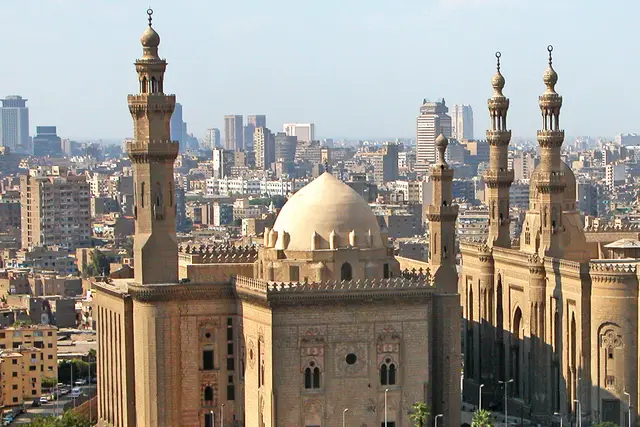
The bazaar’s western edge meets Al-Muizz li-Din Allah Street, the old ceremonial spine of Fatimid Cairo. Head north and you pass the Qalawun complex, with its Mamluk dome and minaret, plus a run of restored madrasas and sabils.
Head south across Al-Azhar Street instead and you reach the Wikala of al-Ghuri. Keep going and you’ll come to Bab Zuweila, one of the surviving medieval city gates.
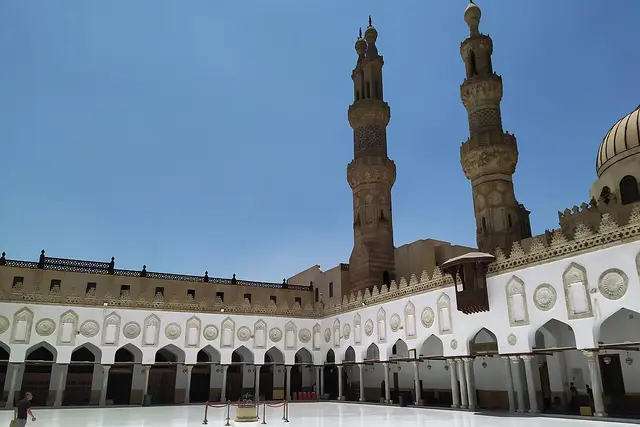
Al-Azhar Mosque, founded in the 10th century, is a short walk through the underpass. Visitors are generally welcome outside prayer times; take your shoes off at the door.
To rest your feet, El Fishawy is the old café in a narrow alley near Al-Hussein. It’s known for mirrored walls, mint tea and a long link to the novelist Naguib Mahfouz. Expect a wait for a seat on weekend nights.
Frequently asked questions
When is the quietest time to visit Khan el-Khalili?
Typically 11am–3pm on weekdays and 11am–2pm at weekends. Avoid weekends from 4pm–10pm, which are usually the busiest hours.
What are Khan el-Khalili's opening hours?
Google currently lists 11am–11pm every day. Individual shops set their own times, and patterns change during Ramadan and around Friday midday prayer, so treat these as a guide.
How do I get to Khan el-Khalili?
Ask a taxi or ride-hailing driver for Al-Hussein Mosque, which sits at the main entrance. By metro, Bab El Shaaria on Line 3 is about a 15-minute walk away. From Al-Azhar Mosque, cross under Al-Azhar Street by the pedestrian underpass.
How long should I spend there?
Allow two to three hours for the bazaar itself. Add about two more if you want to walk Al-Muizz Street, visit Al-Azhar Mosque or stop at El Fishawy café.
What is nearby?
Al-Hussein Mosque is at the entrance. Al-Azhar Mosque is just across Al-Azhar Street. Al-Muizz Street, with the Qalawun complex, runs along the western edge, and the Wikala of al-Ghuri and Bab Zuweila are a short walk south.
Plan your trip to Cairo
Egypt eSIM & staying connected →
Some links above are affiliate links — if you book through them, Wander Atlas earns a small commission at no extra cost to you. It's how we keep every guide free.