A fortress built to watch for Crusaders
Two pencil-thin Ottoman minarets mark the spot. You can see them from half of Cairo, rising from a limestone ridge at the city’s eastern edge. Below them is a wall of honey-coloured stone that Salah al-Din, known in the West as Saladin, began in the 1170s to defend the city against the Crusaders.
The fortress then served as Egypt’s seat of power for close to 700 years. Ayyubid sultans, then Mamluks, then Ottoman governors and finally Muhammad Ali’s dynasty ruled from here. That layering is the real reason to come. Inside a single set of walls you can walk from the 14th century to the 19th in about ten minutes.
Inside the gate, the ground is a series of broad stone terraces and courtyards linked by ramps. Nothing is shaded except the mosque interiors and museum halls, so the open stretches feel long under the Cairo sun.
The Alabaster Mosque and its French clock
The Mosque of Muhammad Ali is the building on every postcard. It was built between 1830 and 1848 in the Istanbul style, with a great central dome ringed by half-domes. The lower walls and courtyard are faced in pale alabaster, which explains the nickname.
Inside, the scale is the point. Hundreds of glass lamps hang on long chains from the dome, and the carpeted floor stretches out with no pews or furniture to break it. Muhammad Ali himself is buried here, in a marble tomb behind a bronze grille to the right as you enter.
Out in the arcaded courtyard, look up at the ornate clock tower. King Louis-Philippe of France sent it as a gift, after Egypt gave France the Luxor obelisk that now stands in the Place de la Concorde. It is famous for never having kept reliable time. Many Egyptians still bring up the trade with a wry smile.
Three mosques, three eras
Most visitors photograph the Alabaster Mosque and leave. The two older mosques nearby are quieter and, to many eyes, more interesting.
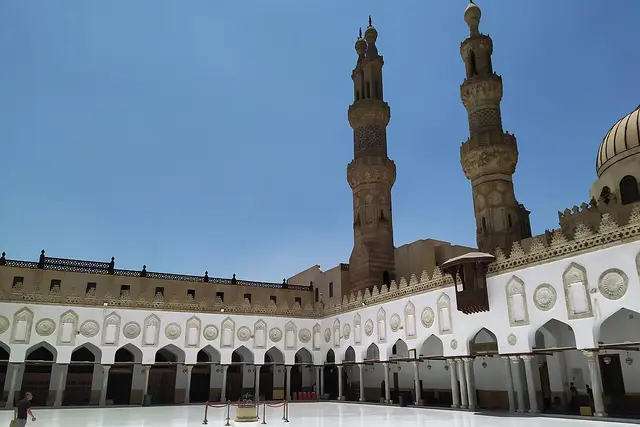
- Mosque of al-Nasir Muhammad (early 14th century): a Mamluk courtyard mosque with arcades built from reused ancient columns. Its two minarets are capped with green faience tiles, a rare touch in Cairo.
- Mosque of Suleyman Pasha (1528): the first Ottoman-style mosque in the city. It is small and domed, with painted ceilings, and it tends to have far fewer people inside.
The complex also holds museums, including the National Military Museum in the former Harem Palace. Opening varies by building and some parts, such as the deep shaft known as Joseph’s Well, are often closed. Treat any museum as a bonus, not the main reason to come.

The western terrace view
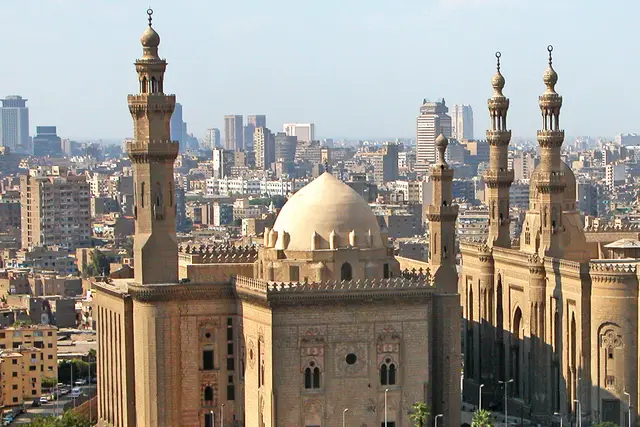
Walk to the balustrade beside the Muhammad Ali Mosque and Cairo opens out below you. Straight down sits Midan Salah al-Din. Beside it are the huge Sultan Hassan Mosque and the Al-Rifa’i Mosque, side by side.
Past them stretches a forest of minarets, satellite dishes and flat rooftops running toward the Nile. When the haze lifts, the Giza pyramids show up faintly on the far horizon. Many days they don’t appear, so take a clear view as luck rather than a promise.
The light on this side is softest in the late afternoon. That lines up neatly with the 4pm–5pm quiet window, so you get a gentler sky and fewer people on the terrace together.
Getting up the hill
No metro station puts you within easy walking distance, and the climb from Islamic Cairo runs uphill along busy roads. Most visitors take a taxi, Uber or Careem. Ask the driver for the Citadel entrance on Salah Salem Road, the main visitor gate.
If you are already exploring Islamic Cairo, ride up and walk down afterward. From the Sultan Hassan Mosque, a driver can have you at the gate in a few minutes. Traffic on Salah Salem can slow down sharply at rush hour, so leave yourself time before closing.
At the moment the site opens 8am–5pm every day of the week. Hours at Egyptian monuments shift with the season and on some holidays, so check this month’s times on the official Ministry of Tourism and Antiquities site.
Shoes, scarves and the 8am gate
Timing. The quietest hours are typically 8am–9am and 4pm–5pm, on weekdays and weekends alike. Weekends between 10am and 3pm are when coach groups and school trips fill the mosque courtyards, so don’t show up then. Egypt’s weekend falls on Friday and Saturday. On Fridays, the working mosques may close to sightseers around midday prayer.
Inside the mosques:
- Take your shoes off at the door. Attendants usually watch them, and leaving a small tip in local notes is normal.
- Cover your shoulders and knees. Women should bring a scarf for their hair, although loaners are sometimes handed out at the entrance.
- Keep your voice low, and don’t walk in front of anyone who is praying.
Tickets and guides. Buy at the official ticket office only, where the current prices are posted, or check them online first. Men near the gate offering to be your guide are unofficial. A polite, firm “la, shukran” (no, thank you) is enough.
Bring: a hat, water and sunscreen. Very little of the site is shaded.
Down into Islamic Cairo afterward
The Citadel works best as the high point of a longer day in historic Cairo, not as a trip on its own. Right at the foot of the hill:
- Sultan Hassan Mosque and Al-Rifa’i Mosque: the two giants you looked down on from the terrace, facing each other across a narrow street.
- Mosque of Ibn Tulun: one of Cairo’s oldest mosques, a short drive west, with an unusual spiral minaret.
- Gayer-Anderson Museum: two linked Ottoman-era houses beside Ibn Tulun.
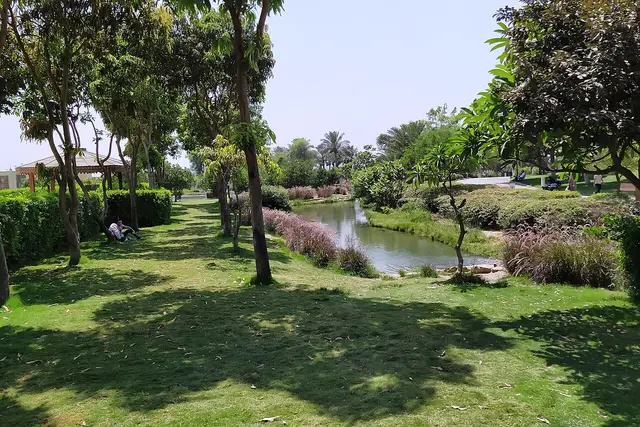
- Al-Azhar Park: a hillside garden to the north, with views back toward the Citadel.
A good order is the Citadel at 8am, the mosques below by late morning, and Ibn Tulun after lunch. That puts the busiest midday hours on the hill behind you.
Frequently asked questions
When is the quietest time to visit Saladin Citadel?
The quietest hours are usually 8am–9am and 4pm–5pm, on weekdays and weekends alike. Try not to arrive between 10am and 3pm on weekends, when the crowds are at their peak.
How long should I spend at the Citadel?
Allow 2–3 hours. That covers the Muhammad Ali Mosque, the mosques of al-Nasir Muhammad and Suleyman Pasha, the western terrace view and a quick look at one museum.
How do I get to Saladin Citadel?
Take a taxi, Uber or Careem and ask for the visitor entrance on Salah Salem Road. No metro station is within easy walking distance, and the walk up from Islamic Cairo climbs along busy roads.
What should I wear to the Citadel's mosques?
Cover your shoulders and knees, and remove your shoes at the mosque doors. Women should bring a scarf to cover their hair, although loaners are sometimes available at the entrance.
Can you see the pyramids from the Citadel?
On clear days the Giza pyramids are faintly visible from the western terrace beside the Muhammad Ali Mosque. Cairo's haze often hides them, so don't count on it.
Plan your trip to Cairo
Egypt eSIM & staying connected →
Some links above are affiliate links — if you book through them, Wander Atlas earns a small commission at no extra cost to you. It's how we keep every guide free.