One building, every era
Most Cairo museums cover a single chapter. This one covers the whole story.
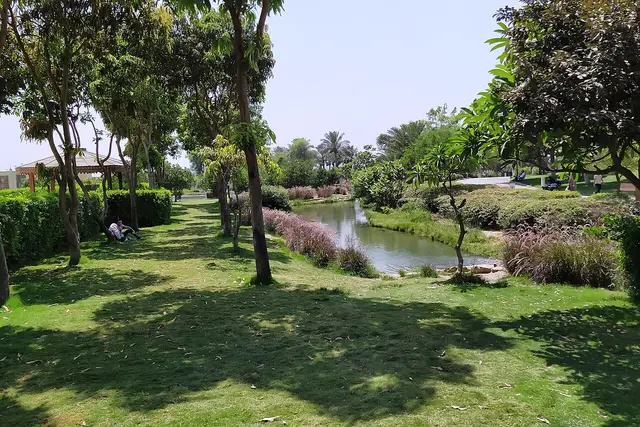
The National Museum of Egyptian Civilization (NMEC to most Cairenes) stands on the edge of Fustat. That is the site of Egypt’s first Islamic-era capital, in the Ein as Seirah district of Old Cairo. The building is a large, modern, sand-toned block, and the lake of Ain el-Sira lies right beside it.
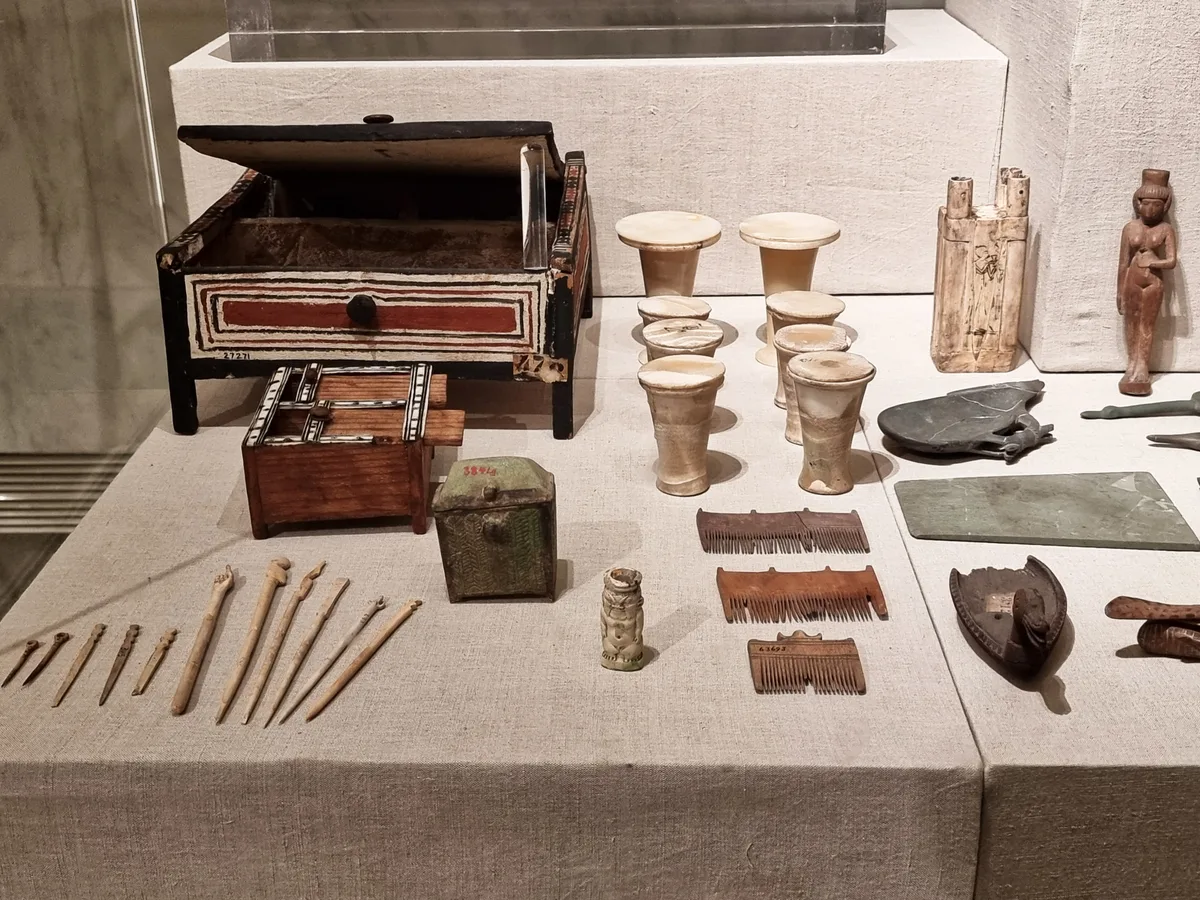
Inside, the layout is simple. A big central exhibition hall tells Egypt’s history in order: sculpture, pottery, metalware, tools, textiles and household objects. Below it sits the reason most visitors come, the hall of royal mummies.
Down to the Royal Mummies Hall
The mummies are kept underground, away from the daylight of the main floor. You walk down into a darkened gallery built to feel like a passage through a rock-cut tomb. Each king or queen lies alone in a climate-controlled glass case, with a low pool of light on the body and the room dark around it.
These are the remains of New Kingdom rulers whose names you know from temple walls in Luxor. Among them:
- Ramesses II, the builder behind Abu Simbel
- Hatshepsut, the female pharaoh of Deir el-Bahari
- Seqenenre Tao, whose skull still shows the wounds that killed him
- Thutmose III and Seti I, whose face is remarkably intact
The coffins are displayed nearby, and information panels sit beside each case. Speak quietly. The hall is designed for silence, and the guards do expect it.
Reading the main hall in order
Go upstairs after the mummies, or before them if the mummy hall is busy. The central gallery runs in chronological order. It starts with prehistoric flints and pottery, then moves through Pharaonic statuary.
From there it continues into the Greco-Roman, Coptic and Islamic periods, and ends with objects from modern Egypt. That breadth is the museum’s real strength. You see how the same river valley produced a Middle Kingdom statue, a Coptic textile and an Ottoman-era metal lamp. Most Cairo itineraries never connect these.
Themed displays on writing, crafts and daily life sit along the route. Allow at least an hour here if you read the labels. If you are short on time, spend it on the Pharaonic and Coptic sections.

Reaching Fustat
No metro station stands at the door. The closest is Mar Girgis on Line 1, the stop for Coptic Cairo. From there you can walk, though it is a fair distance along busy roads with little shade. A short taxi hop is easier.
Most visitors simply book an Uber or Careem straight to the museum. Both apps work well across Cairo and spare you from haggling over the fare. Coming from Downtown or Zamalek, the ride follows the Corniche south toward Old Cairo.
If you’re staying near the pyramids in Giza, the trip is longer, and Cairo traffic is hard to predict. Leave a generous margin if you plan to catch the quiet morning window.
Beating the 1pm crowd
The NMEC is very popular, so timing matters more than almost anything else. BestTime’s forecast of typical foot traffic points to the same answer every day: go first thing.
- Weekdays: quietest 9am–10am
- Weekends: quietest 9am–11am
- Avoid: weekends from 1pm–3pm, when school groups and families usually fill the mummy hall
At the moment Google lists the museum as open 9am–5pm every day of the week. Museum hours in Egypt shift around holidays and Ramadan, so check the official NMEC site for this month’s schedule. Going at opening also gets you to the mummies before the tour coaches arrive. That’s the difference between a quiet room and a shuffling line past the glass.
Inside the gates: tickets, cameras, guides
Expect airport-style security at the entrance. Bags go through a scanner and you walk through a metal detector, so keep large bags and drone gear at the hotel.
Current ticket categories and prices are posted at the ticket office and on the official site. Egyptian museums price foreign visitors and Egyptian nationals differently, and students with a valid international ID card often qualify for a reduced rate. Ask at the counter rather than assume.
Photography in the main hall is generally allowed for personal use. The Royal Mummies Hall is a different matter: photos there are prohibited, and guards will step in if they see a phone raised. Plan to look rather than shoot.
Guides offer their services around the entrance. A licensed Egyptologist can bring the mummy hall to life, but agree on the length and fee before you start. Tipping guides and helpful attendants is normal in Egypt, and small notes in Egyptian pounds are the easiest way to do it.
Pairing it with Coptic Cairo and Fustat
The museum’s location puts it next to one of Cairo’s oldest quarters, so build a half-day around it. Coptic Cairo is a short ride away, around the Mar Girgis metro stop. There you’ll find:
- The Hanging Church, built above a gate of the Roman fortress of Babylon
- The Coptic Museum, a natural follow-on to the NMEC’s Coptic section
- The Ben Ezra Synagogue, tucked into the same walled compound
Close by stands the Mosque of Amr ibn al-As, built on the site of Egypt’s first mosque. A sensible order is the NMEC at 9am, the mummies first, then the main hall. After that, head to Coptic Cairo for the afternoon, while the weekend crowds are filling the museum you’ve just left.
Frequently asked questions
When is the quietest time to visit the National Museum of Egyptian Civilization?
Based on BestTime's forecast of typical foot traffic, it's usually quietest 9am–10am on weekdays and 9am–11am on weekends. Try not to arrive on a weekend between 1pm and 3pm, when it tends to be busiest.
How do I get to the NMEC?
It's in Fustat, Ein as Seirah, Old Cairo. The nearest metro station is Mar Girgis on Line 1, but it's a long walk from there, so most visitors take an Uber or Careem directly to the entrance.
How long should I spend at the museum?
Plan on 2–3 hours: roughly an hour for the Royal Mummies Hall and at least an hour for the chronological main hall.
Can I take photos of the mummies?
No. Photography is prohibited in the Royal Mummies Hall and guards enforce it. Photos for personal use are generally allowed in the main exhibition hall.
What can I combine with a visit nearby?
Coptic Cairo is a short ride away: the Hanging Church, the Coptic Museum and the Ben Ezra Synagogue, plus the Mosque of Amr ibn al-As in Fustat.
Plan your trip to Cairo
Egypt eSIM & staying connected →
Some links above are affiliate links — if you book through them, Wander Atlas earns a small commission at no extra cost to you. It's how we keep every guide free.