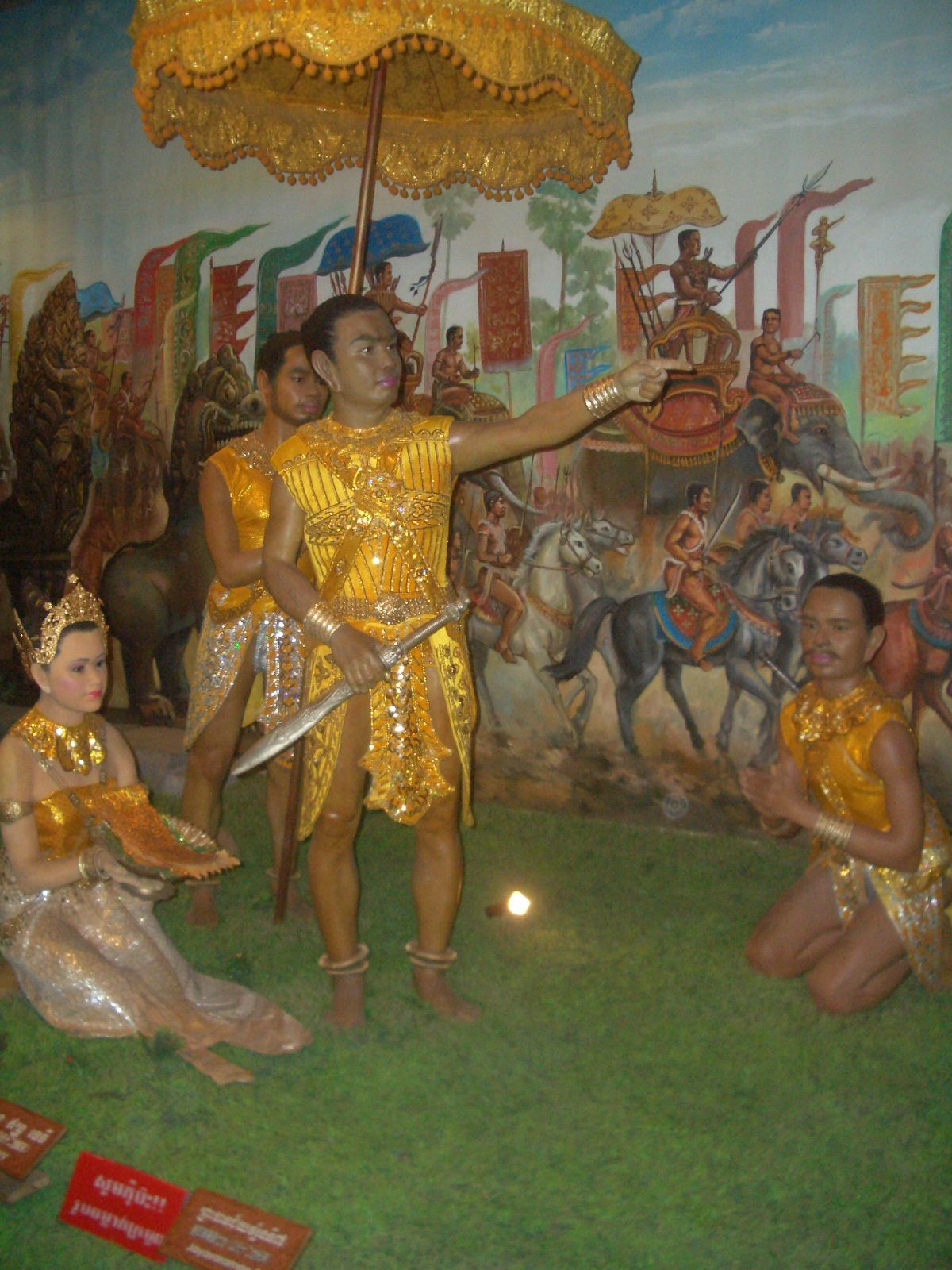
The king behind the stone faces
The festival honours one ruler. Jayavarman VII reigned from 1181 to around 1218 and was the most prolific builder Angkor ever had. Angkor Thom is his walled city. At its centre stands the Bayon, with its towers carved into calm, smiling faces.
He also built Ta Prohm, dedicated to his mother, and Preah Khan, dedicated to his father. Inscriptions credit him with a network of hospitals and rest houses along the roads of the empire. He was a Mahayana Buddhist, which is why Buddhist imagery runs through his temples.
The Bayon’s outer gallery shows his war against the Cham. Carved boats clash on the Tonle Sap, and market scenes and cooking fires fill the lower register. Walking that gallery gives you the history behind the festival’s programme.
December near the Angkor complex
The festival is set for December 2026, the month as announced. The performances take place near the Angkor complex, which starts about 6km north of central Siem Reap. December falls in the dry season, with cool mornings and evenings. It is also the busiest stretch of the year at the temples.
Traditional dance is at the centre of the programme. Khmer classical dance, often called Apsara dance, is on UNESCO’s intangible heritage list, through the Royal Ballet of Cambodia. You will recognise its gestures from the carved apsaras on Angkor’s walls: backward-bent fingers and slow, held poses.
Visitors usually combine the festival with:
- Angkor Thom’s south gate, a causeway lined with gods and demons pulling a naga serpent
- Ta Prohm, where strangler figs grow through the galleries
- Preah Khan, quieter and long, with corridors you can walk end to end
- Psar Chas (Old Market) and Pub Street in town, for evening meals
Festival tickets and the Angkor Pass
These are two separate things. We have no festival ticket details, and no prices. If you spend any time inside the Angkor Archaeological Park, you need an Angkor Pass. It is issued by Angkor Enterprise at the Angkor Ticket Office on Street 60, and through its official online sales.
Passes come in one-day and multi-day versions and carry your photo. The current prices are posted at the ticket office and on Angkor Enterprise’s site. Inspectors check passes at temple entrances, so keep yours on you.
Most visitors fly into Siem Reap-Angkor International Airport, about 50km from town, then travel in by shuttle or taxi. Around the temples, people usually hire a tuk-tuk for the whole day rather than paying per ride.
Watching dance on temple ground
Temple dress rules apply at any event held on or beside these monuments. Shoulders and knees are covered; the rule is enforced strictly at Angkor Wat’s upper level, the Bakan. A light scarf and long trousers handle the December evening chill as well.
- Cambodian riel and US dollars are both used in Siem Reap, and small notes make tuk-tuk fares and stall food easier.
- Tuk-tuk drivers agree the fare and route before setting off, often for a full temple day.
- Monks are not touched, and women hand objects to them via a cloth or a table.
- Feet never point at Buddha images or performers, and visitors do not climb on carvings for photos.
- Flash and drones are often restricted around the temples, so keep the camera quiet during dances.
Frequently asked questions
When is the Jayavarman VII Festival held?
It is announced for December 2026 in Siem Reap. December is the dry, cool season and the busiest time of year at Angkor.
Where does the festival take place?
Near the Angkor complex, which begins about 6km north of central Siem Reap. Jayavarman VII's own city, Angkor Thom, and its Bayon temple are part of that complex.
Do I need an Angkor Pass?
Yes, for any time inside the Angkor Archaeological Park. Angkor Enterprise sells it at the Angkor Ticket Office on Street 60 and online, and current prices are posted there.
What should I wear?
Cover your shoulders and knees, because temple dress rules apply on monument grounds. Long layers also help on cool December evenings.
What else is nearby that connects to Jayavarman VII?
The Bayon, Ta Prohm (built for his mother) and Preah Khan (built for his father) are all his. The Bayon's bas-reliefs show his battles against the Cham.
Plan your trip to Siem Reap
Cambodia eSIM & staying connected →
Some links above are affiliate links — if you book through them, Wander Atlas earns a small commission at no extra cost to you. It's how we keep every guide free.
Related guides
20th Francophonie Summit: Dates, Tickets & Venue (Siem Reap)
Angkor Photo Festival: Dates, Tickets & Venue (Siem Reap)
 event
event Angkor Wat International Half Marathon: Dates, Tickets & Venue (Siem Reap)
 Ended
Ended