
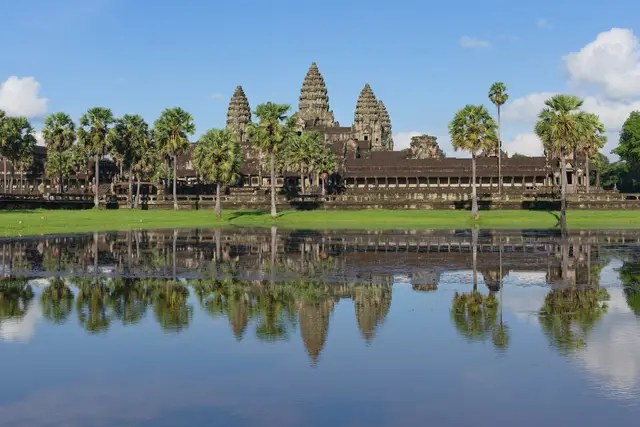
Red dust, sandstone and still water. Those are the three surfaces that define a run through Angkor. The park’s dirt tracks are packed laterite, the colour of rust, and they cut through forest and rice paddies. Wide moats sit around twelfth-century temple walls.
Angkor Trail, also known as Ultra-Trail Angkor, takes place on January 23, 2027. Runners cover that ground on foot, at race pace, among some of the most studied ruins in Asia.
The race on January 23, 2027
This is a trail race, not a road marathon. The route runs through the Angkor Archaeological Park, the protected zone of temples, reservoirs and villages that sprawls north of Siem Reap. The event has traditionally fallen in late January, and the 2027 edition keeps to that slot.
It pulls an international field. Runners fly in from across Asia, Europe and beyond, and that shapes the town for the weekend. Guesthouses fill with people carrying hydration vests, and breakfast conversations turn to cutoffs and foot care.
The organiser publishes the race distances, start locations, cutoff times and entry links on its official site. Those details change from one edition to the next, so this guide does not repeat them.
What Angkor feels like underfoot
You are not running on temple flagstones for most of the day. Much of the park is a working rural landscape. Expect:
- Laterite tracks: compacted red earth, firm in the dry season, rutted where motorbikes and carts pass
- Paddy embankments: narrow raised paths between fields, often harvested and dry by January
- Forest trails: shaded stretches under tall dipterocarp trees, with roots across the path
- Paved park roads: the loop roads that link the major temples, shared with tuk-tuks and tour vans
The terrain is very flat. Angkor sits on the plain north of the Tonlé Sap lake, with only a few low hills such as Phnom Bakheng rising above it. That makes heat and humidity the real test, not elevation.
Dry-season heat and the dawn start
January is the heart of Cambodia’s dry season. Mornings are the coolest part of the day, and afternoons are hot under clear sky. Rain in late January is unusual.
That pattern decides how runners approach the day. Long trail events in hot climates usually start in darkness so the field gets its coolest hours on fresh legs. Head torches are a standard sight on start lines like this one.
Runners coming from a northern winter typically fly in several days before the race to adjust. The dust is the other thing they plan for. A buff or light scarf over the mouth helps on stretches where vehicles pass, and many runners wear gaiters to keep grit out of their shoes.
The Angkor Pass question
Entry to the archaeological park requires an Angkor Pass, sold by the official Angkor ticketing authority. This rule applies to foreign visitors whether they come to run, cheer or sightsee. Passes come in one-day and multi-day versions, and the current prices are posted at the ticket office and on the official Angkor Pass site.
The organiser’s race information explains how park access works for registered runners. Spectators and family members heading into the park to watch need their own pass.
The multi-day pass makes most sense for anyone staying on after the race. Plenty of runners treat the event as the start of a longer trip, with a rest day and then slow mornings at the temples they ran past.
Respecting a living temple landscape
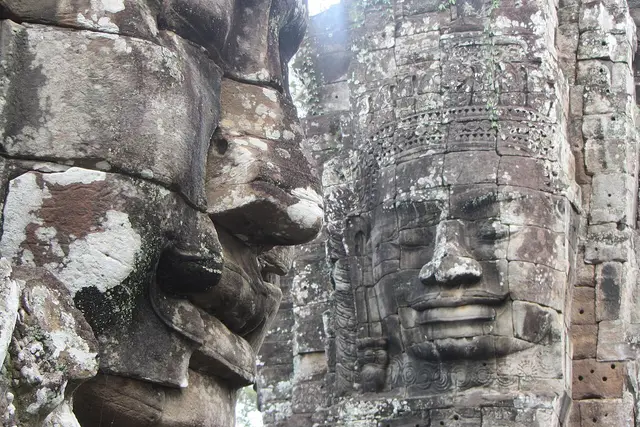
Angkor is a UNESCO World Heritage Site and an active religious place. Monks in saffron robes live and pray within the park, and Angkor Wat itself still holds Buddhist shrines. On race day the field shares the space with all of this.
How runners and visitors usually behave here:
- Cover up inside temples. Shoulders and knees covered is the dress standard for entering temple buildings. Race kit is fine on the trail, but people usually carry a light layer for temple visits afterwards.
- Stay off restricted stonework. Roped areas and closed stairways protect fragile carvings. Climbing them is not tolerated.
- Give monks room. Women in particular avoid touching monks or handing objects directly to them.
- Pay in dollars or riel. US dollars circulate widely in Siem Reap alongside Cambodian riel, and small change often comes back in riel.
- Agree tuk-tuk fares first. Drivers usually quote per trip or per day, and supporters often hire one driver to shuttle between viewing points.
- Leave nothing behind. Gel wrappers in the forest are a bad look in a heritage park.
Where runners stay and recover
Siem Reap town is the base. Angkor Wat lies roughly 6 kilometres north of the town centre, a short tuk-tuk ride on the road through the park checkpoint.
Most visitors cluster around a few areas:
- The Old Market (Psar Chas) area, near the Siem Reap River, walkable to restaurants and cafés
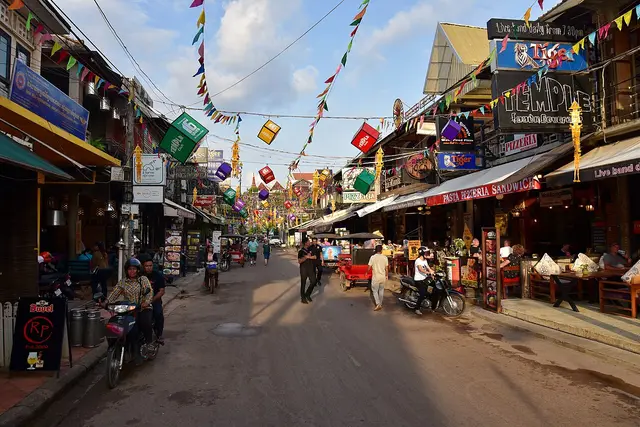
- Pub Street, a block of bars and late-opening restaurants, loud after dark
- The riverside and Wat Bo area, a little quieter, with plenty of guesthouses
For recovery, Siem Reap is easy. Foot and body massage shops line the central streets, and Khmer food is gentle on a tired stomach. Two classic dishes:
- Fish amok: fish steamed in a coconut curry, often served in a banana-leaf cup
- Bai sach chrouk: grilled pork over rice, a common breakfast plate
Getting to Siem Reap
Siem Reap is served by its international airport, with flights from regional hubs including Bangkok, Singapore and Kuala Lumpur. Many international runners connect through one of those cities.
Overland, buses link Siem Reap with Phnom Penh, the capital, and with the Thai border at Poipet. The road from Phnom Penh takes most of a day, so racers coming that way usually build in an extra night.
Inside town, tuk-tuks are the default transport. Ride-hailing apps also operate in Siem Reap and remove the haggling, which helps when you are tired and carrying a race bag.
Frequently asked questions
When is Angkor Trail (Ultra-Trail Angkor) in 2027?
The 2027 edition takes place on January 23, 2027. The race has traditionally been held in late January, during Cambodia's dry season.
Where is the race held?
In the Angkor Archaeological Park, the protected temple zone just north of Siem Reap, Cambodia. Angkor Wat is roughly 6 km from the town centre. The organiser's official site gives the exact start and finish locations.
How do I get a race entry?
Entries, which serve as the tickets for this event, are sold through the organiser's official site. That site also lists distances, cutoffs and current entry fees.
Do spectators need an Angkor Pass?
Yes. Foreign visitors entering the archaeological park need an Angkor Pass from the official Angkor ticketing authority. Current prices are posted at the ticket office and on the official Angkor Pass site.
What is the weather like for the race?
Late January is dry season: cool, dry mornings and hot, sunny afternoons, with rain unusual. The course is flat, so heat and dust are the main challenges, not climbing.
Plan your trip to Siem Reap
Cambodia eSIM & staying connected →
Some links above are affiliate links — if you book through them, Wander Atlas earns a small commission at no extra cost to you. It's how we keep every guide free.
Related guides
 Ended
20th Francophonie Summit: Dates, Tickets & Venue (Siem Reap)
 event
Angkor Photo Festival: Dates, Tickets & Venue (Siem Reap)
 event
Angkor Wat International Half Marathon: Dates, Tickets & Venue (Siem Reap)
 Ended