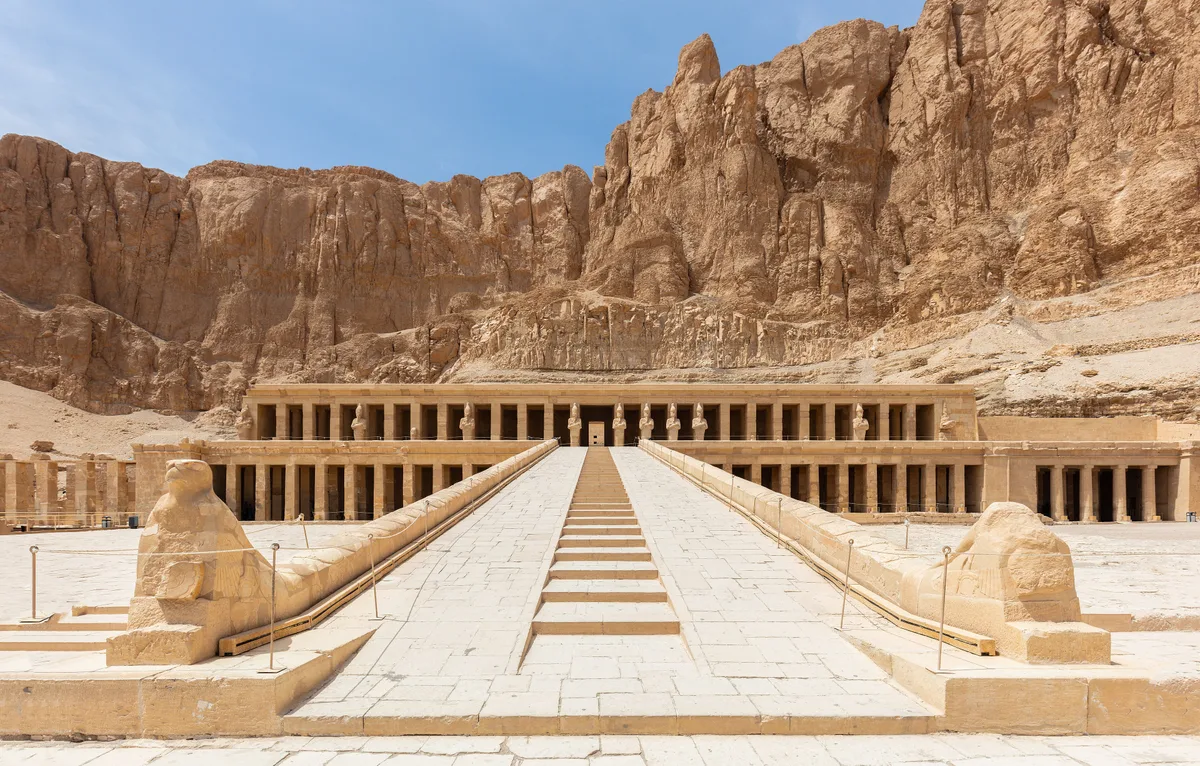
A start line cut into the cliffs
The marathon starts under a wall of limestone. The Temple of Hatshepsut sits in the bay of Deir el-Bahari, three terraces of pale colonnades set into a sheer cliff on Luxor’s West Bank. Its ramps run straight up the middle. The 34th Egyptian Marathon starts beside it at dawn on January 8, 2027.
The setting decides the timing. The West Bank’s tombs and temples are lit from the east, and a dawn start means the first kilometres run in low, flat light across the desert edge. Runners finish before the midday sun takes over the valley floor.
Distances and what the race counts for
There are four ways in, so mixed-ability groups can travel together:
- 5K, a short fun-run distance
- 12K, for runners who want more than a jog but less than a half
- Half marathon
- Full marathon
The race is an Abbott World Marathon Majors Age Qualifying race. That matters to anyone chasing an age-group place at one of the Majors such as Boston, London, Berlin or Tokyo. A result here can count toward that, and it is a big part of why some international runners fly to Upper Egypt in January.
Running the West Bank
The course stays on the West Bank, the side of the Nile the pharaohs kept for the dead. Here the green strip of irrigated fields, canals and mud-brick villages runs right up to the desert. It is open, flat country with the Theban hills behind it, and the monuments are scattered across it.
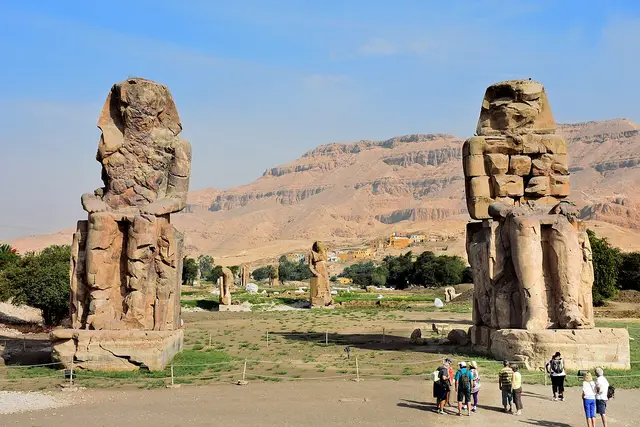
The Colossi of Memnon, the two seated statues of Amenhotep III, stand by the road through the fields. Medinet Habu and the Ramesseum are a short distance away. Runners usually find there is not much shade anywhere on this side of the river. The dawn start is the race’s main protection against heat.
Reaching the start in the dark
Most visitors fly into Luxor International Airport, east of the city on the East Bank. Most of the big hotels line the Corniche on the same side, near Luxor Temple and Karnak. The start is across the river, so race morning begins with a crossing in the dark.
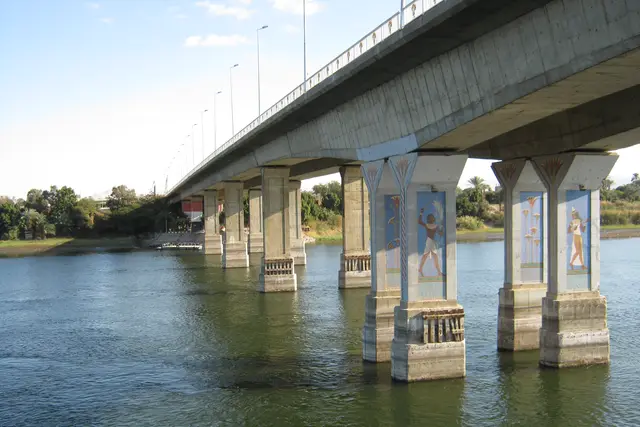
There are two ways over. Road traffic uses the bridge south of town, and the public ferry crosses from the Corniche to the West Bank landing. Runners staying on the East Bank usually arrange a car through their hotel the evening before. Others base themselves in West Bank guesthouses to shorten the trip to Deir el-Bahari.
January mornings in Luxor are cold before sunrise and warm by late morning. Runners tend to wait at the start in a throwaway layer and leave it behind once they are moving.
Handling race week in Luxor
Luxor works on cash and conversation. Here is what visitors usually do:
- Carry Egyptian pounds in small notes. Taxis, felucca captains, ferry tickets and small cafés run on cash. Cards work mainly in larger hotels and restaurants.
- Agree taxi fares before getting in. Meters are not the norm, so fares are settled at the kerb. Hotel reception can tell you what a fair fare looks like.
- Keep change for baksheesh. Small tips are expected for help at temples, for porters and for drivers, and having coins makes it easy.
- Dress for the villages. Running kit is fine on the course. Off it, shoulders and knees covered goes down better in West Bank villages and at temples.
- Say “shukran” (thank you). People notice, and it helps with the ever-present offers of a carriage ride or a guide.
Hot-air balloons often lift off over the West Bank at sunrise in the winter season. Runners heading for the start sometimes see them rising over the fields, which says a lot about how early the day begins.
Turning the race into a Luxor trip
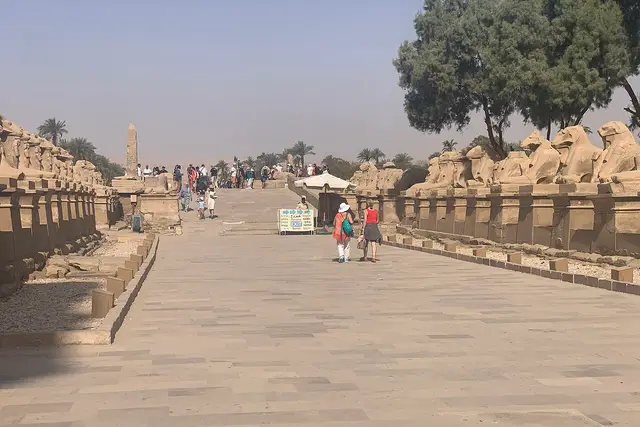
Most runners build a few days around the race, and Luxor rewards it. Before the run, people tend to keep sightseeing light. Karnak’s hypostyle hall and Luxor Temple on the East Bank are walkable from the Corniche hotels and easy on the legs.
After the finish, the West Bank opens up. The Valley of the Kings is in the hills behind Hatshepsut’s temple, the Valley of the Queens is to the south, and the tomb-chapels of the Tombs of the Nobles sit in between. A felucca on the Nile at sunset is the usual way to rest tired legs. Three or four days covers the race and the main sites without rushing.
The race organisers publish the dates, distances and entry details on the official Egyptian Marathon website.
Frequently asked questions
When is the 2027 Egyptian Marathon in Luxor?
The 34th Egyptian Marathon takes place on January 8, 2027. It starts at dawn.
Where does the Luxor Marathon start?
It starts beside the Temple of Hatshepsut at Deir el-Bahari on Luxor's West Bank. That is across the Nile from the Corniche hotels, reached by the bridge south of town or the public ferry.
What distances can I run?
There are four: 5K, 12K, half marathon and full marathon. The race is recognised as an Abbott World Marathon Majors Age Qualifying race.
Where do runners usually stay?
Most stay in the East Bank hotels along the Corniche and arrange a car to the start through their hotel. Some pick West Bank guesthouses to be closer to Deir el-Bahari.
What else is there to see near the start?
The Valley of the Kings, the Valley of the Queens, the Tombs of the Nobles, Medinet Habu, the Ramesseum and the Colossi of Memnon are all on the West Bank. Karnak and Luxor Temple are on the East Bank.
Plan your trip to Luxor
Egypt eSIM & staying connected →
Some links above are affiliate links — if you book through them, Wander Atlas earns a small commission at no extra cost to you. It's how we keep every guide free.