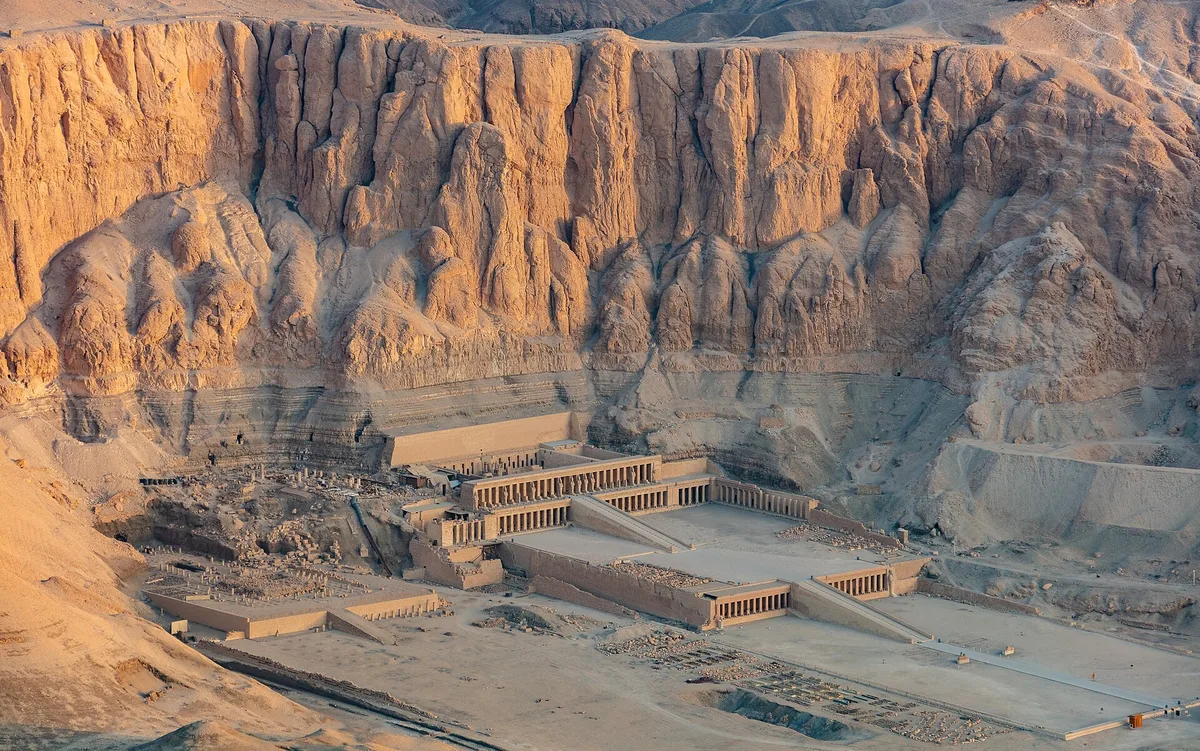
Three terraces against the cliff
From the car park, the temple looks drawn with a ruler. Three broad terraces climb toward a wall of tawny limestone, joined by long central ramps. Pale pillared colonnades run along each level. Behind them, the cliffs of Deir el-Bahari rise higher than anything the builders made.
The ancient name was Djeser-Djeseru, “Holy of Holies.” It was built for Hatshepsut, one of the few women to rule Egypt as pharaoh, during the New Kingdom’s 18th Dynasty. Her official Senenmut is traditionally credited as its architect. Much of what you see was reassembled from fallen blocks by a Polish-Egyptian mission working here since the 1960s. That explains the crisp, partly modern look of the stonework.
What to look for on each level
The detail lives in the colonnades, so slow down there. Standouts:
- Punt reliefs (middle terrace, left side): Hatshepsut’s trading expedition to the land of Punt, with ships, incense trees and the famously stout Queen of Punt.
- Birth colonnade (middle terrace, right side): carvings that cast the queen as the divine child of the god Amun.
- Chapel of Hathor: columns topped with the cow-eared face of the goddess.
- Chapel of Anubis: some of the best-preserved original colour on the site, with blues and ochres still visible.
- Upper terrace: a row of Osiride statues of Hatshepsut, and the sanctuary cut into the rock.
Notice the chiselled-out figures too. After her death, her name and images were deliberately erased, and the gaps are part of the story. The ruined terraces of Mentuhotep II’s much older temple sit just to the south.

Timing your visit around the crowds
The temple faces east, so morning sun lands full on the facade. That fits the crowd forecast well. It’s quietest 7am–9am and 4pm–5pm on weekdays, and 7am–8am and 4pm–5pm at weekends.
Try not to arrive between 9am and 2pm on a weekend. That’s when coach groups fill the ramps and the shade under the colonnades runs out. The current hours are 6am–5pm, but West Bank sites adjust through the year. Check the Ministry of Tourism and Antiquities site for this month’s times.
Plan on 1–1.5 hours. The terraces have almost no shade, and the walk from the visitor centre is long and exposed. At dawn you can often watch hot-air balloons drifting over the West Bank before you go in.
Getting in at Deir el-Bahari
Most visitors cross from the East Bank by the public ferry or a hired motorboat, then take a taxi. Others drive over the Luxor Bridge south of town. The temple pairs easily with the Valley of the Kings, which sits just behind the same ridge. A footpath over the Theban hills links the two for anyone fit enough to try it.
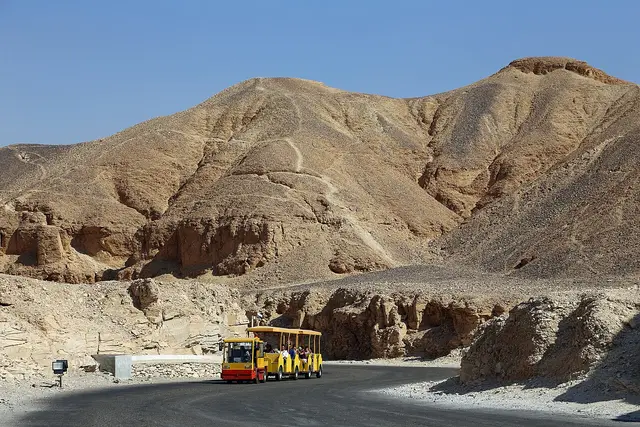
Buy tickets at the office by the entrance; prices are posted there and on the official site. A small train shuttles visitors from the visitor centre up to the temple forecourt. Carry small Egyptian pound notes. Guardians inside the chapels often offer to point out a relief or a photo angle, and they expect baksheesh if you accept.
Climb the ramps first and work downward. That way you reach the upper terrace before the groups and stay cool on the way back down. Don’t climb on blocks or touch painted surfaces. The colour in the Anubis chapel has lasted three and a half thousand years.
Frequently asked questions
When is the quietest time to visit the Mortuary Temple of Hatshepsut?
On weekdays it's calmest 7am–9am and 4pm–5pm. At weekends it's calmest 7am–8am and 4pm–5pm. Avoid weekends between 9am and 2pm, which is the busiest stretch.
What are the opening hours?
At the moment it opens 6am–5pm every day of the week. West Bank sites change their hours through the year, so check the official Ministry of Tourism and Antiquities site before you go.
How do I get there from central Luxor?
Cross to the West Bank by public ferry or motorboat and take a taxi from there, or drive over the Luxor Bridge south of town. The temple is at Deir el-Bahari in the Al Qarna area.
How long should I spend there?
About 1–1.5 hours covers all three terraces and the Hathor and Anubis chapels. Add time if you plan to walk the hill path to the Valley of the Kings.
What else is nearby?
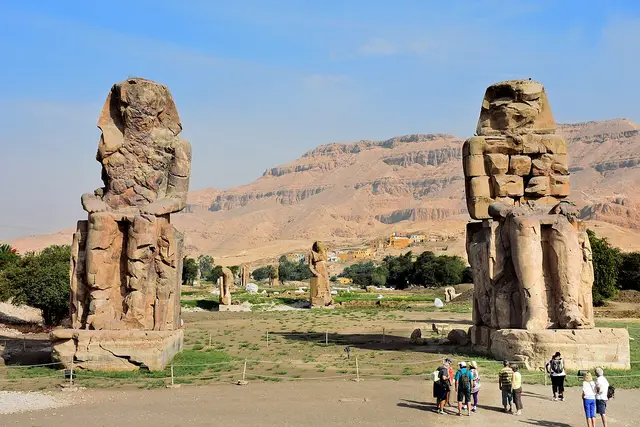
The Valley of the Kings is just over the ridge. Mentuhotep II's ruined temple sits next door, and the Colossi of Memnon are on the road back toward the river.
Plan your trip to Luxor
Egypt eSIM & staying connected →
Some links above are affiliate links — if you book through them, Wander Atlas earns a small commission at no extra cost to you. It's how we keep every guide free.