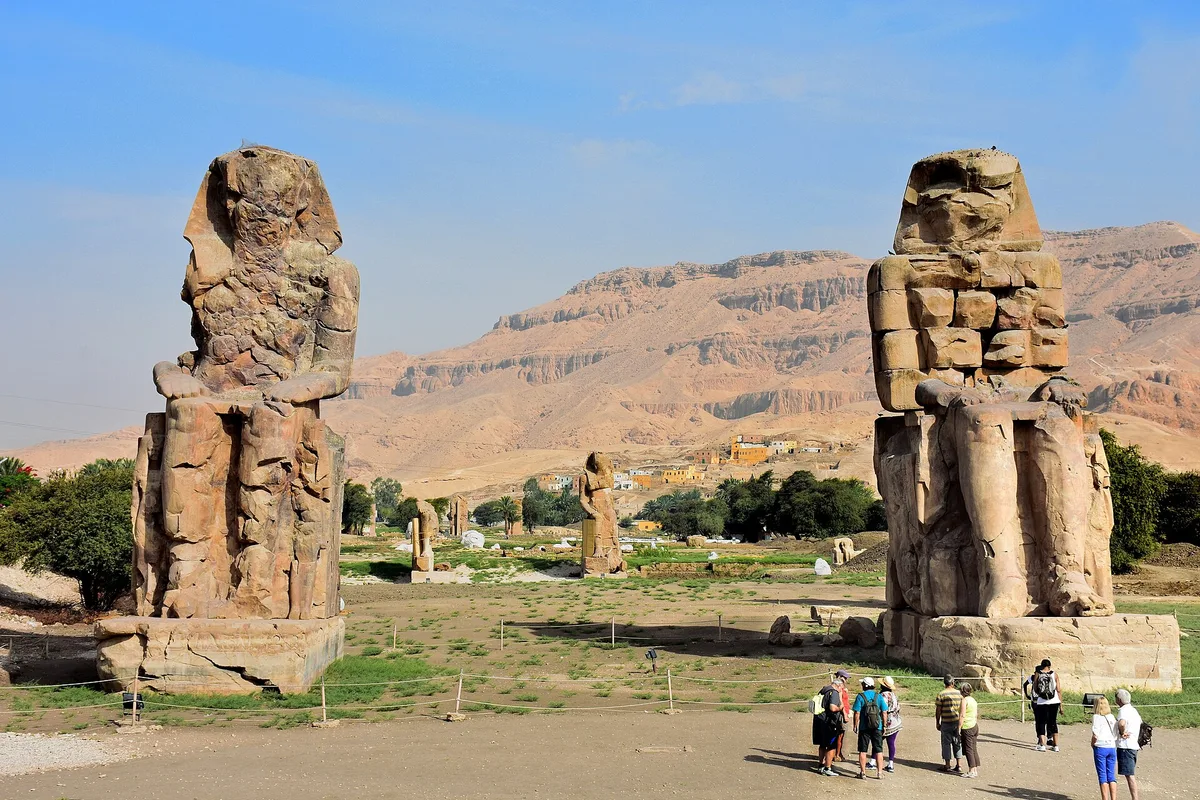
Two kings in a field of sugar cane
They are seated, and they are facing east. Two stone figures of Amenhotep III sit with their hands on their knees, staring across farmland toward the Nile. Each is roughly 18 metres tall. Traffic for the West Bank’s tombs and temples runs right past their feet.
Their faces have been eroded almost smooth. The bodies are cracked and patched, and the northern figure is pieced together from stacked blocks. What survives is scale. Standing at the plinth, you reach about as high as the king’s ankle.
What’s left of a temple that vanished
These two statues once guarded the entrance to Amenhotep III’s mortuary temple. In its day it was one of the largest temple complexes in Egypt. It stood on the floodplain, so annual Nile floods weakened it, and later pharaohs took its stone for their own buildings. The site is now known as Kom el-Hettan.
Look behind the colossi and you will usually see an active excavation. Archaeologists there have been recovering and standing up fragments of statues from the temple’s courts. Fences and work areas change from season to season, so whatever is on view when you arrive is a snapshot of work still going on.
Why the Greeks heard it sing
An earthquake in 27 BC cracked the northern statue. After that it began to make a sound around dawn, probably as rising heat and evaporating moisture moved through the damaged stone. Greek visitors linked the figure to Memnon, a hero of the Trojan War. They said he was greeting his mother Eos, the dawn.
That name has stuck for two thousand years. The statue became a stop for Roman tourists, and many of them carved Greek and Latin inscriptions into its legs. Repairs under Emperor Septimius Severus are traditionally blamed for silencing it. Look closely at the lower legs of the northern colossus and you can still pick out lines of that ancient graffiti.

Details worth walking around for
Most people take a photo from the front and get back in the vehicle. Give it ten more minutes and walk all the way round each statue.
- The smaller figures carved beside the king’s legs. They represent royal women, including his queen Tiye and his mother.
- The throne sides, where reliefs show Nile gods binding together the plants of Upper and Lower Egypt.
- The inscriptions on the northern statue’s legs, which are easiest to read in low side light.
- The patchwork of the northern statue, where the Roman-era repair blocks look different from the original single piece of stone.
Timing your stop on the West Bank
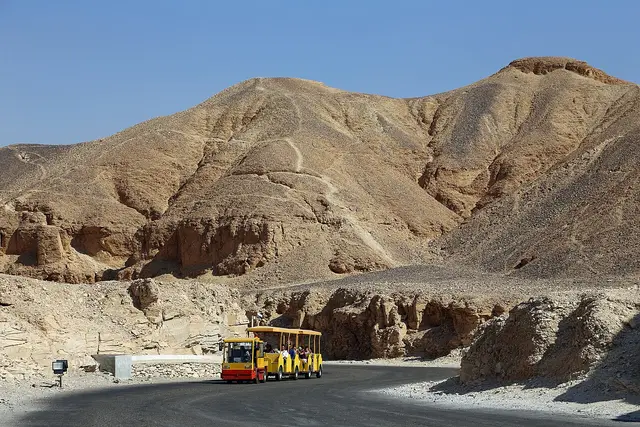
The colossi stand in open fields with almost no shade, so morning is the comfortable time. If you are doing the classic West Bank day, see them on the way out. Then head on to the Valley of the Kings before the midday heat.
At dawn, the hot-air balloons that launch over the West Bank often drift across the sky behind the statues. Early arrival also puts the sun on their east-facing fronts. Opening arrangements and any ticketing can change, so check locally or with your guide before you go.
Medinet Habu is a short drive south and the Ramesseum is a short drive north. Deir el-Medina, the workers’ village, is close by too. All of them fit easily into a half-day loop with the colossi.
Handling taxis, vendors and the photo crowd
This is one of Luxor’s most visited sights, and coaches tend to arrive in waves. If a group is gathered at the front, walk round to the back first or wait a few minutes. The tour schedule usually moves people on quickly.
- Getting there: from the East Bank, cross by the public ferry or a motorboat, or drive over the bridge south of town. On the West Bank, take a taxi, cycle or join a tour.
- Agree the fare first: settle the price with taxi drivers before you get in, including waiting time. Pay in Egyptian pounds and keep small notes on you.
- Vendors: stalls along the edge sell statuettes and scarves. A friendly “la, shukran” (no, thank you), said once and firmly, does the job.
- Unofficial helpers: someone may offer to show you the “best angle” and then ask for baksheesh, a tip. If you don’t want the help, decline before they start, not after.
- Respect the stone: don’t climb on the plinths or touch the inscriptions. Keep out of any fenced excavation areas.
Frequently asked questions
Where exactly are the Colossi of Memnon?
They're on Luxor's West Bank in the Al Qarna area. They sit right beside the main road that runs from the Nile toward the Valley of the Kings, so most West Bank tours pass them on the way in.
How long should I spend at the Colossi of Memnon?
Around 20 to 30 minutes is enough to walk round both statues, see the smaller royal figures and read some of the Roman-era graffiti. Allow longer if you want to watch the excavation behind them.
What is the best time of day to visit?
Early morning. There's almost no shade, the east-facing statues get the best light after sunrise, and the hot-air balloons often float past in the background. It's also when you can fit the stop in before the Valley of the Kings.
Do the Colossi of Memnon still sing?
No. After an earthquake in 27 BC cracked it, the northern statue gave off a sound around dawn, but it went quiet after Roman repairs, traditionally credited to Septimius Severus.
What else is nearby?
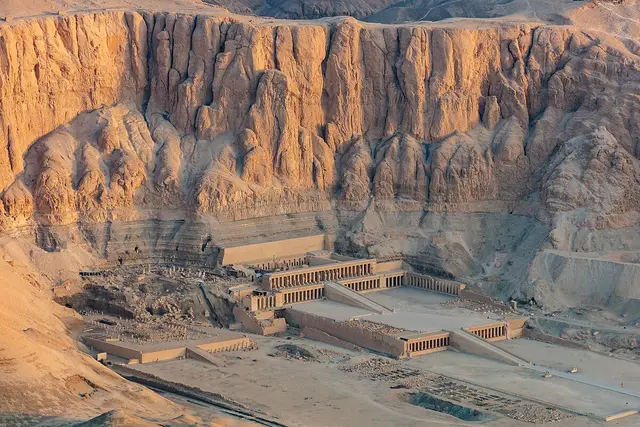
Medinet Habu is a short drive south, and the Ramesseum and Deir el-Medina are close as well. The Valley of the Kings and Hatshepsut's temple at Deir el-Bahari are a little further into the hills.
Plan your trip to Luxor
Egypt eSIM & staying connected →
Some links above are affiliate links — if you book through them, Wander Atlas earns a small commission at no extra cost to you. It's how we keep every guide free.