A valley cut for the dead
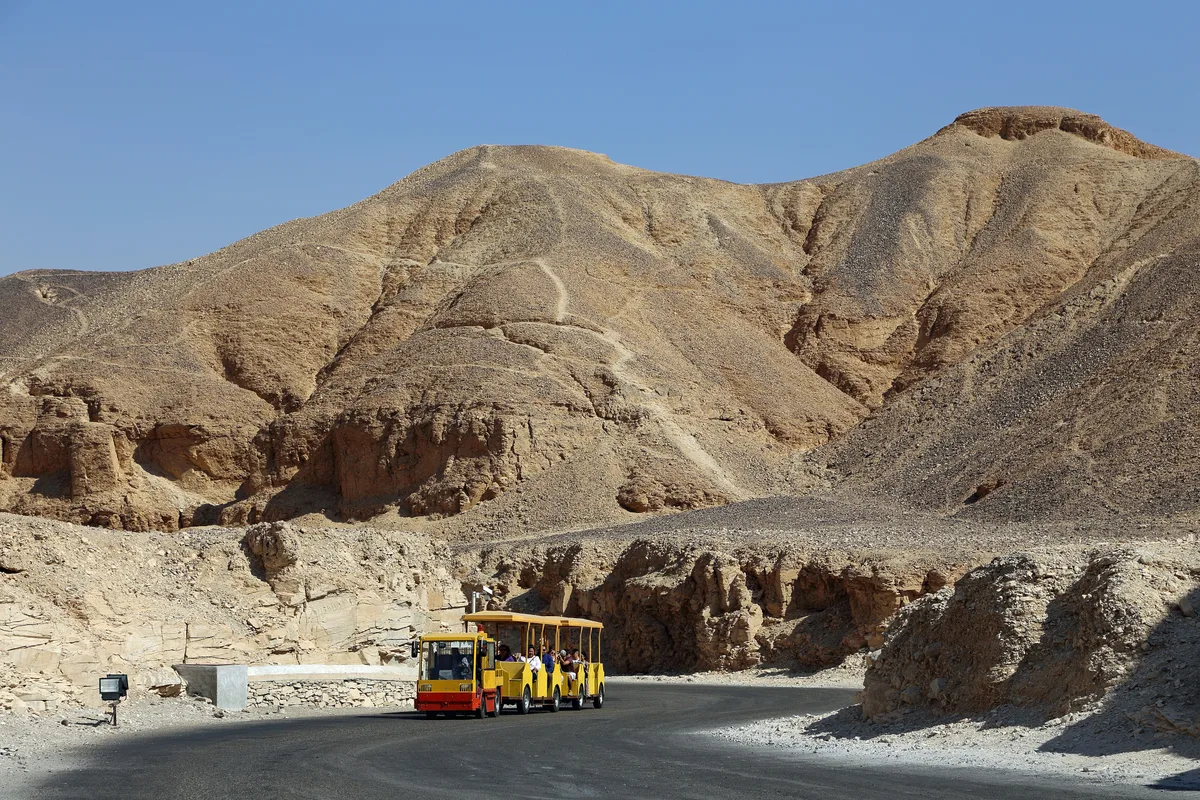
There is no green here at all. The West Bank fields stop at the edge of the desert, and the road climbs into a dry wadi of pale, crumbling limestone. Above it rises al-Qurn, a natural pyramid of rock. It is one likely reason the pharaohs of the New Kingdom chose this place for their tombs.
The valley splits into two branches, East and West, and holds 63 known tombs and burial chambers. Most visitors only see the East Valley. Doorways are cut straight into the cliff faces, each marked with a KV number, and the paths between them are packed gravel with almost no shade.
Down into the tombs
Inside, the heat changes and the light drops. Long sloping corridors run into the rock, past walls covered in painted texts and figures from the Book of the Dead, the Amduat and other guides to the afterlife. Wooden walkways and glass panels protect the paintwork. The deepest chambers can feel close and humid when they’re full of people.
Your standard ticket covers a set number of tombs, chosen from whichever are open that day. The open tombs rotate for conservation, so check the board at the entrance before you plan. A few tombs need their own separate ticket:
- KV62, Tutankhamun: small, but his mummy is still on display here
- KV17, Seti I: one of the longest and most finely decorated tombs in the valley
- KV9, Ramesses VI: its astronomical ceiling paintings cover the burial chamber
Two to three hours is enough for the standard tombs plus one extra. Visitors who are keen on Egyptology often stay for half a day.
Crossing to the West Bank
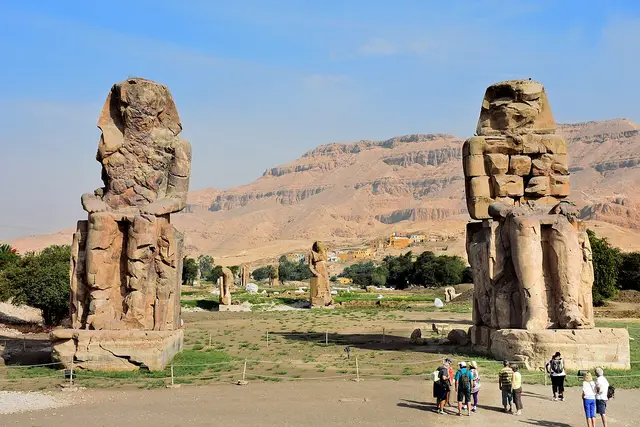
The valley is on the opposite side of the Nile from Luxor’s hotels, the Corniche and Karnak. You can drive over the Luxor Bridge south of town, or take the public ferry or a motorboat across and then pick up a taxi on the far bank. The road then runs past the Colossi of Memnon and up into the hills.
Taxis can be hired for the morning or the whole day, and drivers will wait while you visit. Agree the route and the fee before you set off. Most people combine the valley with:
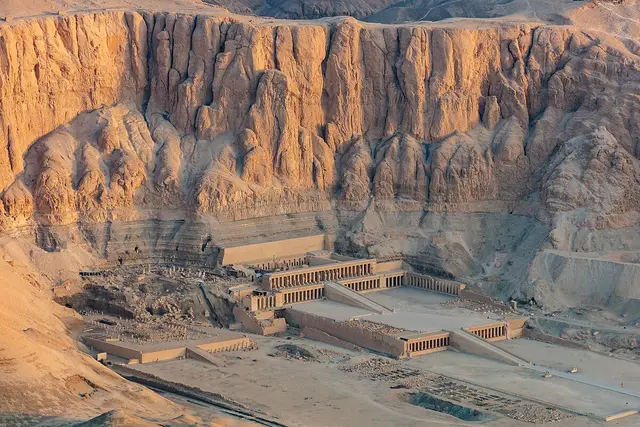
- Deir el-Bahari, Hatshepsut’s terraced temple, on the far side of the same ridge
- Deir el-Medina, the village where the tomb builders lived
- Medinet Habu, the mortuary temple of Ramesses III
- The Valley of the Queens, a short drive south

Getting past the tour-bus wave
Timing matters more here than at almost any other site in Luxor. The site currently opens 6am–5pm, though hours on the West Bank shift through the year, so confirm on the official Egyptian tourism site before you go. Weekend mornings from 7am to 12pm are the busiest stretch, when coach groups fill the corridors and queues build at the most popular doors.
It’s usually calmest between 3pm and 5pm on weekdays and from 2pm to 5pm at weekends. The catch is the afternoon heat, which is fierce in summer. Ticket sales and individual tombs may stop before the gate closes, so don’t leave it until the last hour.
Rules at the gate and in the corridors
You buy tickets at the visitor centre, which is also where the add-on tomb tickets are sold. Prices are posted at the ticket windows and on the official site. Card machines are not always working, so carry Egyptian pounds as a backup. Inside, there’s a large model of the valley that helps you work out where the open tombs are.
A small electric tram runs from the visitor centre up to the tomb area. It’s worth taking, as the walk is short but completely exposed. Some other things to know:
- Photography rules have changed over the years. Check what your ticket allows, and never use flash.
- Guards at the tomb doors check your ticket and sometimes offer to show you a hidden corner for a tip. You can politely decline.
- Licensed guides are not allowed to lecture inside the tombs. Expect your briefing outside the entrance.
- Shoulders and knees covered is the norm, and it keeps the sun off as well.
What to carry up the wadi
Bring more water than you think you need, plus a hat and sunglasses. The limestone reflects the glare from every side. Wear shoes with grip: some corridors are steep, with ramps and narrow stairs.
If you want the valley at its quietest and coolest, a dawn hot-air balloon over the West Bank lets you see the ridge from above first. Get to the gate after the coach groups leave, and you’ll often have a painted burial chamber nearly to yourself.
Frequently asked questions
When is the quietest time to visit the Valley of the Kings?
It's usually calmest from 3pm to 5pm on weekdays and from 2pm to 5pm at weekends. Avoid weekend mornings from 7am to 12pm, which are the busiest. Arrive early enough in the afternoon that the ticket office is still selling tickets.
How do I get to the Valley of the Kings from Luxor?
Cross to the West Bank by the Luxor Bridge, the public ferry or a motorboat. Then take a taxi past the Colossi of Memnon and up into the hills. Many visitors hire a driver for the day to combine it with Hatshepsut's temple and Medinet Habu.
Is Tutankhamun's tomb included in the standard ticket?
No. Tutankhamun's tomb (KV62), Seti I (KV17) and Ramesses VI (KV9) each need a separate ticket from the visitor centre. The standard ticket covers a set number of the other tombs that are open on the day.
How long should I spend there?
Plan on two to three hours for the standard tombs plus one add-on. Allow half a day if you want to see several of the separately ticketed tombs.
What are the opening hours?
It's currently open 6am–5pm every day of this week. Hours on the West Bank shift through the year, so check the official site for the current month before you go.
Plan your trip to Luxor
Egypt eSIM & staying connected →
Some links above are affiliate links — if you book through them, Wander Atlas earns a small commission at no extra cost to you. It's how we keep every guide free.