Paddles on the Siem Reap River
A long, narrow boat sits low in brown water. Dozens of paddlers kneel two abreast down its length, and their blades hit the river together. Somebody near the prow calls the stroke. That is what the Royal Water Festival boat races come down to: village crews pushing carved wooden racing boats as hard as they can over a short course.
For 2026 the festival dates are November 23-25. The national centrepiece is in Phnom Penh, but boat race activities and festivities also take place in Siem Reap over the same days. The Siem Reap version is smaller and closer to the water, set in a town most visitors know for the Angkor temples.
What Bon Om Touk actually celebrates
In Khmer the festival is Bon Om Touk, which means roughly “festival of rowing boats”. It falls at the full moon of the lunar month of Kadeuk, which is why the dates move from year to year. It marks the end of the rainy season.
The timing is tied to a quirk of geography. For months the Tonle Sap river runs backwards, swollen by the Mekong and pushing water into the great lake north of Phnom Penh. Around the festival it reverses and drains south again. The races, the lanterns and the moon offerings all celebrate that turn of the water.
The “Royal” in the name matters. The festival has long been associated with the Cambodian monarchy, and the racing tradition is often linked to the naval crews of the Angkorian kings. Carvings of war canoes on the Bayon temple at Angkor Thom, a short ride north of town, are often pointed to as early evidence.
The boats and the crews
The racing boats are long dugouts or plank boats, built to hold a large crew. Many have painted prows shaped like dragons or naga serpents, and each crew usually rows in matching shirts in its team colours. Teams typically represent villages, pagodas, districts or government bodies, and the rivalries are real.
Heats are short and loud. Two boats race side by side, so the most satisfying place to stand is near the finish, where you see who edges it. Between heats, crews paddle slowly back up the course, and that is the best moment to look at the boats properly.
Ambok and the midnight moon
The racing is the daytime half of the festival. After dark it turns to the moon. Three rituals give Bon Om Touk its evening character:
- Sampeah Preah Khae, the salute to the moon, when families make offerings and pray as the full moon rises high.
- Ak Ambok, eating ambok: young rice that is roasted, pounded flat and usually mixed with coconut and banana. Vendors sell it in bags around festival season.
- Loy Pratip, illuminated floats set on the water, sometimes small candlelit floats and, in bigger celebrations, large lit boats.
Ambok is the one thing a visitor can join without any fuss. It is crunchy, mildly sweet and slightly smoky. It turns up only around this time of year, so it is worth tasting even if you skip the boats.
Getting to the riverbanks
The Siem Reap River runs north to south through the middle of town. Psar Chas (the Old Market) and Pub Street sit a few minutes’ walk from its west bank. In past years the racing and crowds have gathered along this central stretch, with the Royal Gardens and the Royal Residence a little further north. On festival days most visitors walk down from their hotel or take a tuk-tuk.
Tuk-tuks are the default transport in Siem Reap. Ride-hailing apps such as PassApp and Grab show a fixed fare in the app, and many visitors use them to hail a tuk-tuk. During the races, roads near the river can close or clog, so drivers often drop passengers a few blocks away and riders finish on foot.
Visitors flying in arrive at Siem Reap Angkor International Airport. It opened in 2023 and sits well outside town, around an hour’s drive on the main road. Coaches and minivans from Phnom Penh take most of a day.
Watching from the riverbank
Watching the Siem Reap boat races works like a street festival, not a stadium event. No ticketing platform is named for the Siem Reap events. Watching from the banks has traditionally been open to anyone who finds a gap in the crowd. Here is how spectators usually go about it:
- Spot-holding: Cambodian families often come with mats and snacks and settle in for hours. Spots at the rail near the finish tend to go first.
- Shade: Late November is the start of the dry season and the riverside has little cover. Hats and water are standard, and umbrellas held low keep the view clear for people behind.
- Paying for food: Street stalls usually take cash. Riel and US dollars both circulate in Siem Reap, and small notes make buying ambok or grilled skewers easier.
- Being a guest: Bon Om Touk is a national celebration first. Cheering for whichever boat the people around you back always goes down well.
One courtesy is easy to overlook. If monks or official guests are seated near the course, keep your feet pointed away from them and don’t stand in front of them for photos. In Cambodia that gesture carries more weight than most visitors expect.
Fitting it around Angkor
You don’t have to choose between the temples and the festival. Many visitors spend the cool early morning at Angkor Wat, Angkor Thom or Ta Prohm, rest through the hottest hours, then come back to the river in the afternoon. Evenings are for the moon rituals and the stalls around Psar Chas.
Hotels and guesthouses in Siem Reap fill up more than usual over a national holiday, because Cambodians travel home or take trips too. Visitors who want the biggest version of the festival sometimes split the long weekend. They spend one day in Phnom Penh, where the races run along Sisowath Quay, and the rest in Siem Reap.
Frequently asked questions
When are the Royal Water Festival boat races in Siem Reap in 2026?
The 2026 festival dates are November 23-25. The main national celebrations are in Phnom Penh, and boat race activities and festivities in Siem Reap run over the same days.
Do you need tickets to watch the boat races in Siem Reap?
No ticketing platform is named for the Siem Reap events. Spectators have traditionally watched from the open riverbanks of the Siem Reap River in the town centre.
Where in Siem Reap do the races take place?
In past years the racing has been on the Siem Reap River through central town, a short walk from Psar Chas (the Old Market) and Pub Street, with the Royal Gardens further north.
What else happens during the Water Festival besides the races?
In the evening people salute the full moon (Sampeah Preah Khae), eat ambok, which is flattened roasted rice mixed with coconut and banana, and float illuminated lanterns on the water (Loy Pratip).
Can I visit Angkor Wat during the festival?
Yes. Many visitors tour the temples in the cool early morning and come back to the river in the afternoon and evening for the races and the full-moon festivities.
Plan your trip to Siem Reap
Cambodia eSIM & staying connected →
Some links above are affiliate links — if you book through them, Wander Atlas earns a small commission at no extra cost to you. It's how we keep every guide free.
Related guides
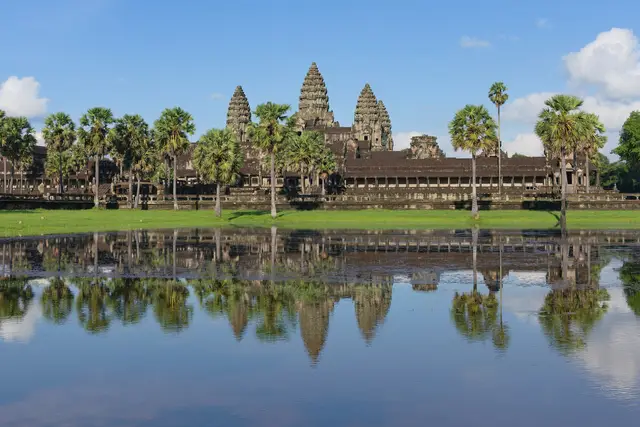 event
event Angkor Wat International Half Marathon: Dates, Tickets & Venue (Siem Reap)
 Ended
Ended Pchum Ben (Ancestors' Day) Festival: Dates, Tickets & Venue (Siem Reap)
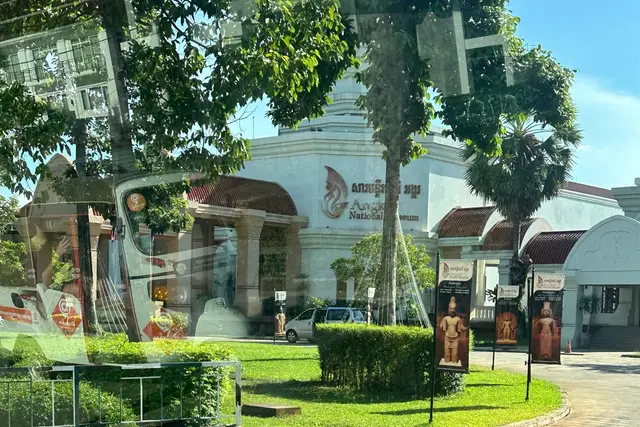 attraction
 Angkor National Museum: Siem Reap Travel Guide (4.4★)
 restaurant