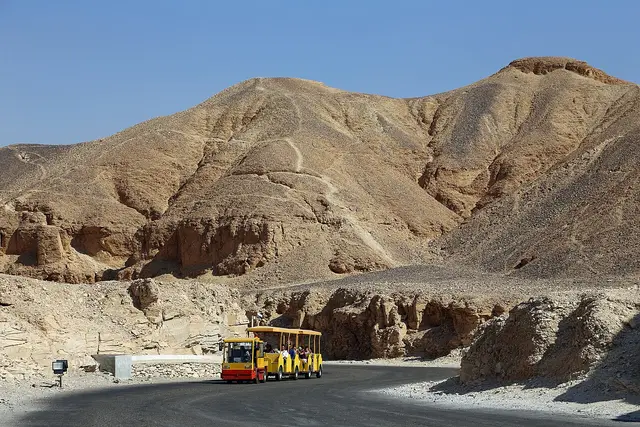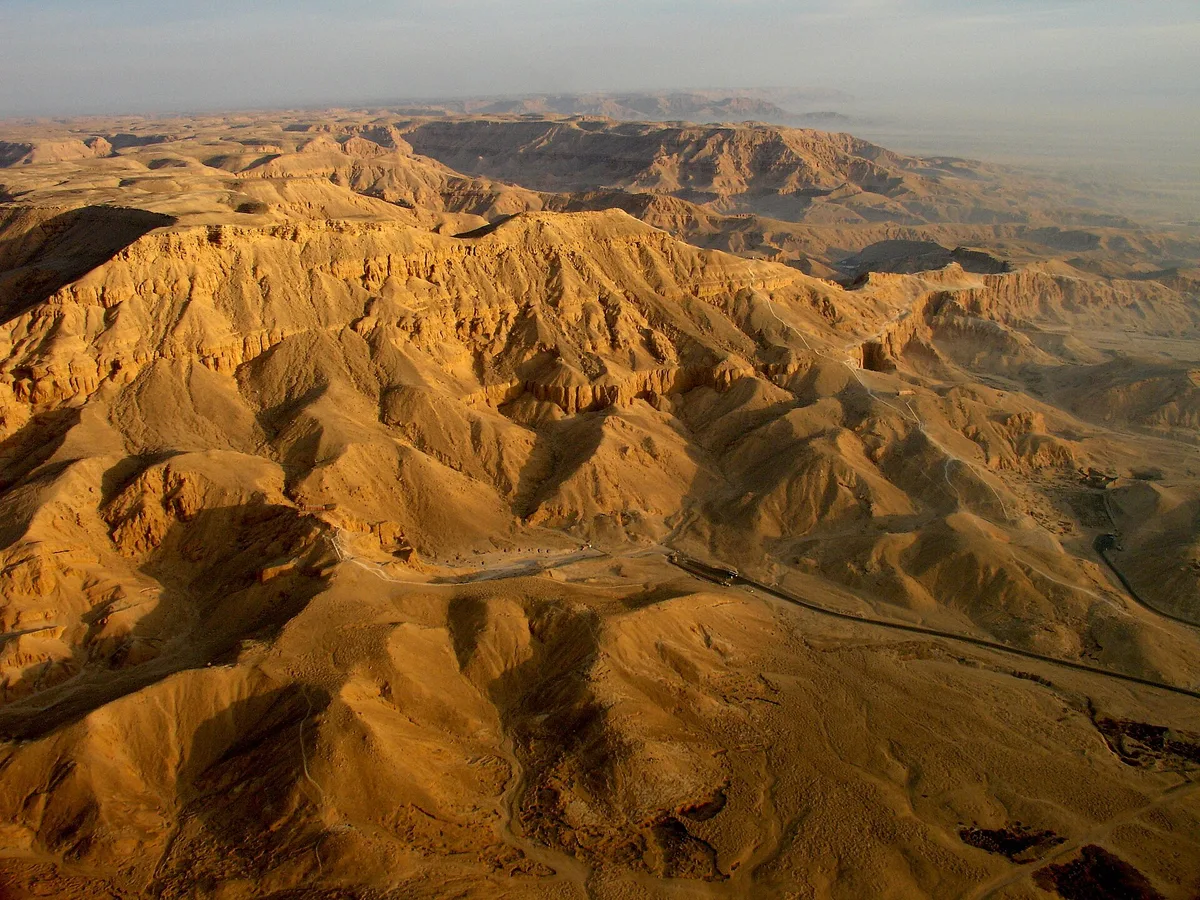
The road ends in a dead-end wadi of pale limestone. Low cliffs close in on three sides, and the walkways are swept gravel. Small doorways lead into the rock, each fronted by a metal gate and a little shaded sign. From the car park you see almost nothing of what you came for. Everything is underground.
The ancient Egyptians called this place Ta Set Neferu, usually translated as “the Place of Beauty.” The best of the painted walls still earn that name.
A burial ground for queens and young princes
Nearly every tomb here is a family tomb. About 90 of them are cut into this valley. The burials span the New Kingdom, but the most famous ones belong to the Ramesside era: wives of Ramesses II and sons of Ramesses III who died young.
That gives the valley a different feel from the Valley of the Kings across the ridge. These tombs are smaller and more personal. In several of them a pharaoh is painted leading his child by the hand, presenting him to the gods one by one.
Only a handful of tombs are open on any given visit, and the authorities rotate them. The ones most often unlocked include:
- Amenherkhepshef (QV55), a son of Ramesses III, with intensely blue backgrounds and crisp figures of the boy and his father
- Khaemwaset (QV44), another son of Ramesses III, with similar father-and-son scenes
- Titi (QV52), a Ramesside queen, with more faded paintings and a cross-shaped plan
The list changes, so check at the gate which tombs are open that day.
Nefertari’s ticket and the clock inside
The tomb of Nefertari (QV66) is the reason most people make the trip. She was the Great Royal Wife of Ramesses II, the same queen honoured at the smaller temple of Abu Simbel. The Italian archaeologist Ernesto Schiaparelli opened her tomb in 1904.
Its paintings are considered among the finest surviving from ancient Egypt. Nefertari appears in a white pleated gown with a vulture headdress, playing senet and offering to the gods. The ceilings are painted deep blue and scattered with yellow stars.
Between 1986 and 1992 the Getty Conservation Institute and Egyptian authorities conserved the walls. Because breath and humidity damage the plaster, access is controlled. Visitors need a separate, premium ticket on top of the general valley entry, and time inside is strictly limited. A guard at the door keeps watch on the clock.
Plan for it:
- Decide in advance whether you want Nefertari, because it is priced well above the standard ticket
- Read the side walls on the way down; the burial chamber at the bottom is the payoff, but the stairway scenes are just as fine
- Check the current photography rules at the ticket window; they have changed over the years
Getting there from the East Bank
The valley is on the West Bank, across the Nile from Luxor town and Karnak. Most visitors cross by the road bridge south of the city in a taxi or with a hired driver. You can also take the local public ferry from the East Bank corniche near Luxor Temple, then pick up a taxi on the far side.
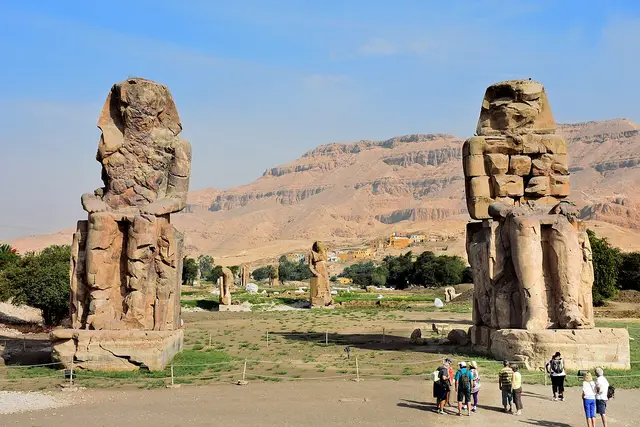
From the West Bank landing, the road runs inland through sugar cane fields past the Colossi of Memnon. The Valley of the Queens is a few minutes beyond, at the foot of the Theban hills. There’s no meaningful public transport into the wadi itself, so arrange your driver to wait for you.
Tickets, guards and baksheesh at the tomb doors
Each open tomb has a custodian at its gate who checks your ticket. Some offer to switch on an extra light or point out a detail. Others may hint that you can take a forbidden photo in return for baksheesh, a small tip. Saying no politely is normal and won’t cause offence.
A few habits that make the visit smoother:
- Carry small Egyptian pound notes for tips and the toilets; change for large notes is hard to find here
- Have your ticket ready at every tomb door, because each one is checked separately
- Don’t touch the walls or lean on the glass panels; the paint is original
- Keep your voice down underground, as the corridors carry sound
Ticket prices change, and the current rates are posted at the ticket office and on the official Egyptian antiquities ticketing site. Licensed Egyptologist guides are not allowed to lecture inside some tombs. Get the explanation outside, then go in and look.
Beating the heat in the wadi
The open valley has almost no shade, and the limestone reflects the sun back at you. At the moment it opens at 6am and closes at 5pm every day this week. Opening times on the West Bank shift through the year, though, so confirm this month’s hours on the official site before you set out.
Arriving close to opening means cooler air on the walk between tombs. Tour groups often do the Valley of the Kings first and reach the Queens later in the morning, so an early start usually puts you ahead of them. Allow 1.5–2 hours, longer if you add Nefertari.
Bring water and a hat. The tombs are cooler than outside but can feel stuffy, and the stairways down into them are steep, with handrails.
Pairing it with the southern West Bank
The valley sits close to several other sites, which makes it easy to build a half-day loop:
- Deir el-Medina: the workers’ village and painted tombs of the craftsmen who decorated these royal tombs, a short drive away
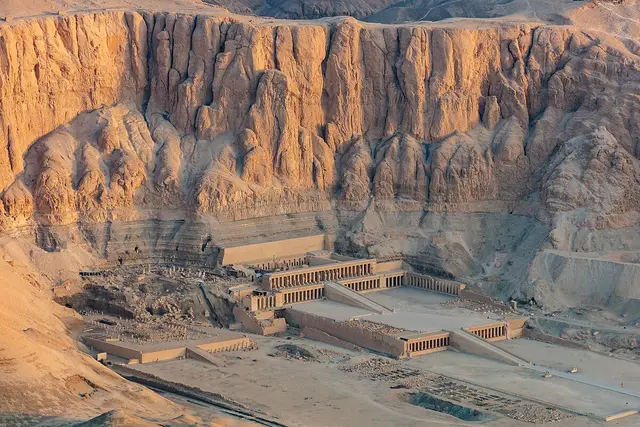
- Medinet Habu: the mortuary temple of Ramesses III, father of the princes buried here, with deeply carved reliefs
- Colossi of Memnon: the two seated statues of Amenhotep III, on the road back toward the Nile
- The Ramesseum: Ramesses II’s mortuary temple, a little further north
Pairing the princes’ tombs with their father’s temple at Medinet Habu ties the day together. The same king who painted himself guiding his sons here built that temple a few kilometres away.
Frequently asked questions
How do I get to the Valley of the Queens from Luxor?
Cross to the West Bank by taxi over the bridge south of town, or take the public ferry from the East Bank corniche and pick up a taxi there. The valley is a few minutes past the Colossi of Memnon. Arrange for your driver to wait, as there's no public transport into the wadi.
Is the tomb of Nefertari included in the standard ticket?
No. Nefertari's tomb (QV66) needs a separate premium ticket and has strictly limited time inside. Current prices are posted at the ticket office and on the official Egyptian antiquities ticketing site.
What are the opening hours, and when should I go?
It currently opens 6am to 5pm, but West Bank hours shift through the year, so check the official site for this month's times. Arriving early gives cooler air, and you usually get there before tour groups coming over from the Valley of the Kings.
How long do I need at the Valley of the Queens?
Allow about 1.5–2 hours to see the open tombs, and longer if you add Nefertari. It fits easily into a half day with Medinet Habu and Deir el-Medina nearby.
Which tombs are open to visitors?
Only a few are open at any time, and they rotate. Amenherkhepshef (QV55), Khaemwaset (QV44) and Titi (QV52) are often open. Check the list at the gate on the day.
Plan your trip to Luxor
Egypt eSIM & staying connected →
Some links above are affiliate links — if you book through them, Wander Atlas earns a small commission at no extra cost to you. It's how we keep every guide free.